Babtists

My sense of right and wrong is well developed and is based in justice, not in following the second-hand pronouncements of a god that I no longer believe exists.

I was raised in Southern Baptist churches. Every moment of my young life I felt like an outsider. The Baptists helped with that. Inside me was the hard truth that every day, I secretly wished I was a girl. I heard over and over again from the churchy people in my family, who insisted (without knowing what was true of me, because I kept that secret buried deep inside) that people with sin in their hearts were bound for Hell, and that femininity in a male was a sickness and a sin.

I was presented with a choice. And my choice was to embrace my whole self: to be a good person, and to let the idea that I was inherently evil go, instead of internalizing the self-hatred I had been raised to. Every positive step I’ve taken since then has led to a larger worldview and a stronger sense of myself in the larger context.

My sense of right and wrong is well developed and is based in justice, not in following the second-hand pronouncements of a god that I no longer believe exists. This is not to say that I have not been a little shit at times in my life. I have. I acknowledge that I have made mistakes, as everyone does, and I continue to try to move forward and choose to take good action for myself and those I love as best I can.

But the Southern Baptist Council, the governing body of the churches I attended as a child, continues to dehumanize and marginalize people, and continues to believe that its views should rule this country and hold dominion over this world. At the 2024 Southern Baptist Convention, attendees voted to actively oppose Obergefeld, to exclude from membership any church with a female pastor, and to keep the SBC’s financials from being made public, thereby confirming their ideology as toxic.

Of course, they also have this effed up resolution, dated June 1st, 2014, that permanently separates me from the ideology of much of my family: On Transgender Identity, which is contradictory and hateful on a profound level. They claim that “we love our transgender neighbors” and in the same document resolve to “oppose all cultural efforts to validate claims to transgender identity,” rendering the whole document nonsensical and branding themselves once again as hypocrites.

And that’s at the heart of my exit from that religion and from the positive regard of much of my family.
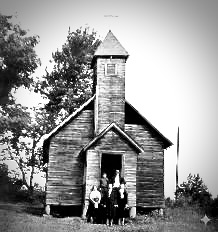
not my family, not my church

Please consider liking and commenting on this post. Subscribe if you can – it costs you nothing and helps this site thrive – and share this post with those you know who might appreciate it.
Dear Editors: I Am Not My Transition!

I’ve heard back from more than one editor, and a couple of agents as well, that a story about my childhood that I’ve been sending around is “just a chapter” because it includes a scene of me directly trying to deal with my gender issues: they all seem to want to make the whole 6,000 word story I’ve submitted about that one page-long scene. I don’t have the opportunity to explain that the story I’ve sent them doesn’t really have anything to do with “transition” per sé, because cover letters need to be brief and professional. If I did take the space to try to explain this, it would feel like I’m apologizing for my work if I were to drill down into aspects of my story in a preface that only the editor will ever see. A story needs to stand on its own.

So I’m writing this post.

I’ve been told to just leave that part of the story out, but that seems just as unreasonable. Physically, it would be possible to do that, and while that would certainly bypass the issue of my “problematic” identity, to leave that important part of myself out of my story would feel like I’m retreating into the closet that I’ve fought so hard not to be trapped in. From my point of view, the choice I’m being presented with is either to leave out this important aspect of who I am or focus my story on the expected trope of transition.

Imagine requiring a story about a black kid to include some kind of resolution to the “problem” of their blackness, or else leave that out of the story entirely. Such an expectation from an editor would immediately brand them as racist. And yet, any time I have heard an actual critique of the piece I’m discussing, this is what I hear back.

I’m trans every day. Getting my hormone prescription was only one day, one story. There have been so many stories in my life: I was trans in all of them. My being trans is just a trait, not my whole identity. I am not my transition. That’s not the only story I have to tell. Surprisingly, the vast majority of what’s happened in the time I’ve been walking the Earth has nothing to do with a particular course of medical treatment.

I refuse to accept that any memoir I write needs to either deny who I am or be about the gatekeepers who OK’ed my medical transition. I am grateful to them, but at least one of these people has had me sign an NDA. They don’t want the publicity, and I’m OK with that.

This particular memoir piece is a story about a kid who is being bullied. The fact that the main character is trans is important, but not central, and the resolution to the story is not going to come from waiting the thirty seven years it took me to get my medical transition started: the situation is much more immediate than that, so the resolution must be, too. That resolution must be about being bullied and how the central character, who happens to be trans, deals with it.

By the logic of these literary gatekeepers, no story can be self-contained, because there is always some central issue in a person’s life that won’t resolve into a nice little package with a ribbon and a bow on it. Requiring a self-contained solution to such a global problem as gender incongruence is unreasonable. Conversely, you can live with such an unresolved issue for a very long time, while many other things happen. I can tell you that this is so from personal experience.

Unfortunately, it’s been a major obstacle to getting my work published. It’s quite frustrating.

Books I Like #3

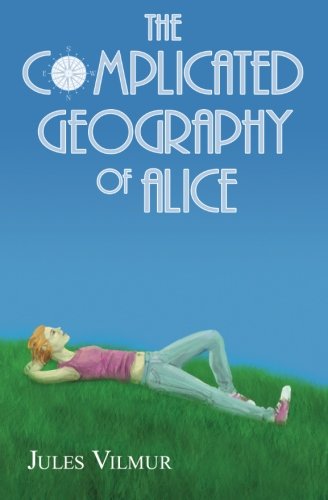
The Complicated Geography of Alice by Jules Vilmur

Self-Published, 2014

geographyalice

This is my favorite transition memoir. I found parts of it as blog posts at Daily Kos, back when I read that thing, and when I learned that author Jules Vilmer was about to self-publish a book-length version, I was thrilled. The realized object is no disappointment.

It tells the story of Alice, a troubled teen who had been wearing a “boy suit,” and her mother, who accepted her immediately, without a moment’s hesitation, and the story of Alice’s transition and traumas over the next few years. There is humor and sadness, love, joy, and tragedy in this book, and you experience it right along with Jules and Alice.

The aspect of this memoir I find most unusual and compelling is that it’s told through the eyes of someone who loves a trans person, rather than being a first person account. In this case, a first person account wouldn’t be possible, and that is also compelling. This is a story that Vilmer had to tell, and she tells it marvelously.

If you follow the link through from Jules’ site to Amazon, it appears that you can still buy the book in paper. I’m proud to own my copy, and I eagerly point you to your own opportunity to read it.