Part 4, Chapter 1, pp. 249-266
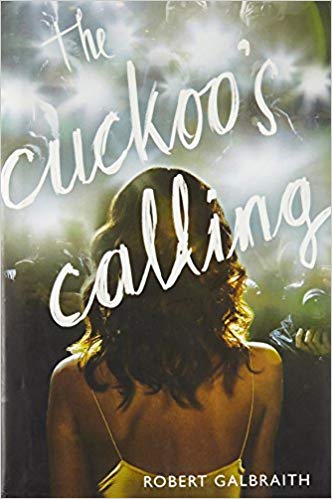
I generally prefer fantasy and science fiction when I read for pleasure. Mystery is a genre that I have never gravitated towards, though I watch enough of it on television.
So it should come as no surprise that when I make one of my exceedingly rare forays into reading a detective novel, the writer would be someone who has gained much of their renown for their work in my “home” genre. Robert Galbraith is the lightly-worn pseudonym of JK Rowling, in case you are one of the three or four people on the planet whom I assume must exist who hadn’t come across this bit of information yet.
It occurs to me, having just finished this bit of the first Cormoran Strike novel, that scene work is one of the most fundamental aspects of the detective novel. How else, then, should a detective gather information than via interviews with the various people who knew the victim? One can google, I suppose, and Cormoran Strike and his temp assistant Robin Endicott both spend quite a bit of time doing web searches and reading articles for information, but ultimately, the best source of information in research is a primary source. Thus the need to do what is called “legwork”.
I could spend some time talking about the significance of that term in relation to the particular character of Strike, but that would be a different craft reflection.
The scene between Strike and Guy Somé excited me, because I enjoyed watching these two characters — strangers, very different on many levels — discover someone they could respect and appreciate over the course of an interview around a very difficult topic: the death of Somé’s friend and muse, supermodel Lula Landry, which Strike is investigating.
Throughout the scene, as this is just past midway through the book, other players in the story are discussed, and Somé offers sharp observations about each. We don’t know how many of these insights Strike finds novel, because he doesn’t want to influence a subject: Strike has shown throughout the course of the book that he is a gifted and disciplined detective. He keeps his opinions to himself, while working to bring out the viewpoints and knowledge of the people he interacts with professionally in as pure a form as he can.
There are three people in this scene: Somé and Strike, plus Trudie, Somé’s recently-hired and much put-upon assistant. As an aside, I suspect that part of Trudie’s purpose in this scene is to remind us of Robin Endicott, though Robin is never mentioned. Another aspect of Trudie’s purpose is to reveal some aspects of Somé’s character.
The subtext in this scene fairly sings, as both of the major players in it thrive on reading subtext. At least one attribute that defines Somé as a brilliant entrepreneur is his ability to read people. He’s also abrupt and sharp in his unvarnished takes on those around him, and those takes are without fail poignant and pithy. He is also cagey in how he uses those insights. He is familiar with Strike, basically through certain aspects of Strike’s background. Somé has dressed Strike’s father, aging but still a-list rock star Jonny Rokeby. Strike avoids the limelight, it’s not his world, and he and his father barely know each other.
As overtly as Strike is working to understand who Somé is, and what he adds to the overall contextual world of the dead woman he is investigating, Somé is working just as hard to figure out the person across the desk from him, because that is what Somé does. Somé keeps subtly probing Strike, trying to gain clues as to who he is and what his motivations might be. Part of the tension in the scene early on is Strike working to keep from being the subject of Somé’s own desultory investigation.
The turning point in their relationship comes with this exchange:
“…How come,” said Somé, swerving suddenly off the conversational track, “Jonny Rokeby’s Son’s working as a private dick?”
“Because that’s his job,” said Strike, “Go on about the Bristows.”
Somé did not appear to resent being bossed around; if anything, he seemed to relish it, possibly because it was such an unusual experience. (p. 258)
Somé’s general tone does not change. He seems to use frankness as a kind of offensive weapon, and the edge in his conversational style does not, at first go away. In fact, one of the first things that shows that Somé’s attitude has changed is a brief fit of pique. But then two pages later in the scene he lets his birth name slip, and before the end of the scene, he cries openly in front of Strike over the death of Lula, whom he considered family.
I love the understatement of that moment: the simple bluntness of Strike’s reminder of the business they were conducting, his demonstration of his professionalism struck a chord with Somé, and earned his respect. This was perhaps the third or fourth foray into Strike’s personal business, each time rebuffed similarly. But the nature of Somé’s character is to reason out whatever response he gets and to contextualize it; Somé is, as stated previously, a detective of sorts himself: a paragon of street wisdom.
The best part of the scene comes at the very end.
As Somé led Strike back down the spiral stairs and along the white-walled corridor, some of his swagger returned to him. By the time they shook hands in the cool tiled lobby, no trace of the distress remained on show.
“Lose some weight,” he told Strike, as a parting shot, “and I’ll send you something XXL.”
As the warehouse door swung closed behind Strike, he heard Somé call to the tomato-haired girl at the desk: “I know what you’re thinking, Trudie. You’re imagining him taking you roughly from behind, aren’t you? Aren’t you, darling? Big rough soldier boy,” and Trudie’s squeal of shocked laughter.
In zingers aimed at both Strike and his assistant, he shows his respect for each of them. We learn that whatever tension there is between Somé and Trudie, they understand and appreciate each other. A couple of other moments that we might have misread earlier in the scene are more properly illuminated by this exchange. We also see that, while Somé can’t really help himself from taking a jab at Strike, there’s respect and even generosity towards him mixed in. I both imagine Strike smiling to himself as he walks away (never stated in the book) and Rowling herself smiling as she completed this beautifully constructed scene.



 Broadcast From the Brain Radio
You must be logged in to post a comment.