Books I Like #6

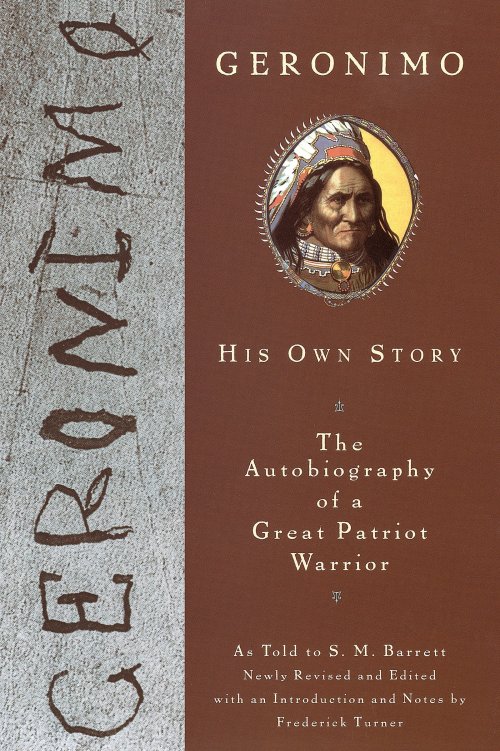
Geronimo: His Own Story: The Autobiography of a Great Patriot Warrior by Geronimo, with S. M. Barrett and Frederick W. Turner

Plume (revised edition) 1996)
A1Io8dGTEaL

Here’s some history that was not told by the victors, though they did transcribe and edit it. It’s an amazing and enraging account.

Geronimo was not a chief, though he did become a war chief of the Mescalero Apaches. In this book he recounts for us the story of how his tribe ran afoul of the Tucson city fathers, who got tired of Apache raids and decided to have the Apaches removed, and how Geronimo led the fight to stay put. He was a brilliant leader, and managed to keep his small band of warriors and family together and on their land for years. Geronimo’s retelling made me hate those old Tusconans just as much as Woody Guthrie’s talking about their grandsons did in Bound For Glory.

This book is also notable for the archival photos of Geronimo and other Mescaleros. I got a lot out of them. They were all taken post-capture, so there’s an air of sadness to them, but I also loved that how Geronimo’s personality was captured in some of them. He was a very charismatic man, stylish and uniquely handsome, as well as being one of the fiercest warriors the world has yet seen.

Books I Like #5

The Slow Regard of Silent Things by Patrick Rothfuss, Illustrated by Nate Taylor

DAW Books, New York, 2014

Slow Regard

Patrick Rothfuss has been working on the Kingkiller Chronicles for long enough that it’s almost reasonable to call it his life’s work. The first two books in the series, The Name of the Wind (2008) and The Wise Man’s Fear(2011) are as good as epic fantasy gets: character-driven (and what characters!), in a vividly realized world. It’s the story of a brilliant, romantic boy who has lost everything and then found purpose in life again, framed with an older version of the character, who is in hiding, having caused a slow-rolling, ongoing disaster from which he cannot entirely escape. We have no idea what that disaster is, because Rothfuss saved that reveal for the third and final book, which he’s still working on.

Rothfuss is a hugely talented writer, and apparently meticulous in his process. I feel quite confident that when we do finally get that ending, those of us who are eagerly awaiting it 8 years later are going to be blown away, because everything he’s written has done this already.

So, in the midst of our wait for that third book, to be called The Doors of Stone, Rothfuss has written a couple of interim pieces set in his world, which is called “The Four Corners”. There’s a short story about a supporting character in the later time frame, and TSROST, which focuses on Auri, a character known to Kvothe, his first-person narrator in the two previous books, from his time at The University.

Auri’s a former student at the University, who studied alchemy, and whom magic has broken in some way that we still don’t (and probably will never) know. She’s the only character in the book, though it’s the nature of Auri that she would disagree with that statement, and that’s at the heart of this story.

I’ll go no farther in describing it than to say that some hate TSROST because they think it has no plot. I disagree, though the throughline here is extremely subtle. It’s my favorite of his books. I think the writing is luminous.

Books I Like #4

The Boys of My Youth by Jo Ann Beard

Little, Brown, & Co. Boston, New York, Toronto, London 1998

boys-of-my-youth

This was one of the books I was assigned to read in my MFA program, and I wrote a craft annotation of it. It’s a collection of brilliant memoir essays from many different stages of Beard’s life, each one more vivid and intimate than the last. My favorites were the one where she’s watching fireworks with her family as a child, and the one that’s written from the point of view of a coyote.

My own memoir work is similar, though when I go back to it, I will revise it into a single narrative.

Books I Like #3

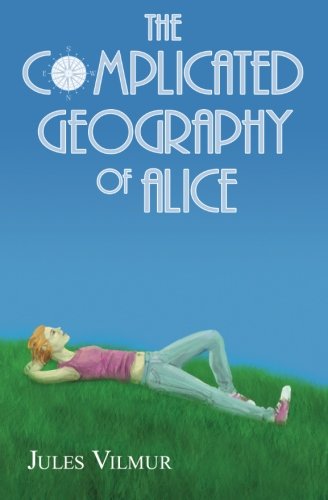
The Complicated Geography of Alice by Jules Vilmur

Self-Published, 2014

geographyalice

This is my favorite transition memoir. I found parts of it as blog posts at Daily Kos, back when I read that thing, and when I learned that author Jules Vilmer was about to self-publish a book-length version, I was thrilled. The realized object is no disappointment.

It tells the story of Alice, a troubled teen who had been wearing a “boy suit,” and her mother, who accepted her immediately, without a moment’s hesitation, and the story of Alice’s transition and traumas over the next few years. There is humor and sadness, love, joy, and tragedy in this book, and you experience it right along with Jules and Alice.

The aspect of this memoir I find most unusual and compelling is that it’s told through the eyes of someone who loves a trans person, rather than being a first person account. In this case, a first person account wouldn’t be possible, and that is also compelling. This is a story that Vilmer had to tell, and she tells it marvelously.

If you follow the link through from Jules’ site to Amazon, it appears that you can still buy the book in paper. I’m proud to own my copy, and I eagerly point you to your own opportunity to read it.

Books I Like #2

Assassin’s Fate: Book III of the Fitz and the Fool Trilogy by Robin Hobb

Del Rey, New York 2017

Assassinsfate

I am a genre reader and writer, and this is my genre.

This book stands in for the entire 15-book sequence, from Assassin’s Apprentice on, and including the Liveship Traders books. You are not allowed to skip the Liveship books, because you need that part of the story for the huge payoff you get in this book. Part of why this works so well for me may have to do with the fact that I’ve been reading them since the very first one was new, eagerly anticipating each one as it hit the shelves like a total nerd. She also wrote the Soldier’s Son trilogy (which I also love, by the way) in the same period, so that’s 18 books on the highest level of epic fantasy writing, all published within a 15 year span. They range in length from about 500 to over 1000 pages.

They chronicle a time when the world built to tell the story in changes over the space of about 50 to 60 years. 9 of the 15 books focus on a dreamer/clairvoyant who is determined to change the course of history, and who is gender variant, sometimes presenting as male, sometimes as female, and who never reveals a set gender identity at all (the Fool) and their catalyst, the bastard son of a dethroned heir-apparent prince from a large medieval-equivalent kingdom (FitzChivalry Farseer).