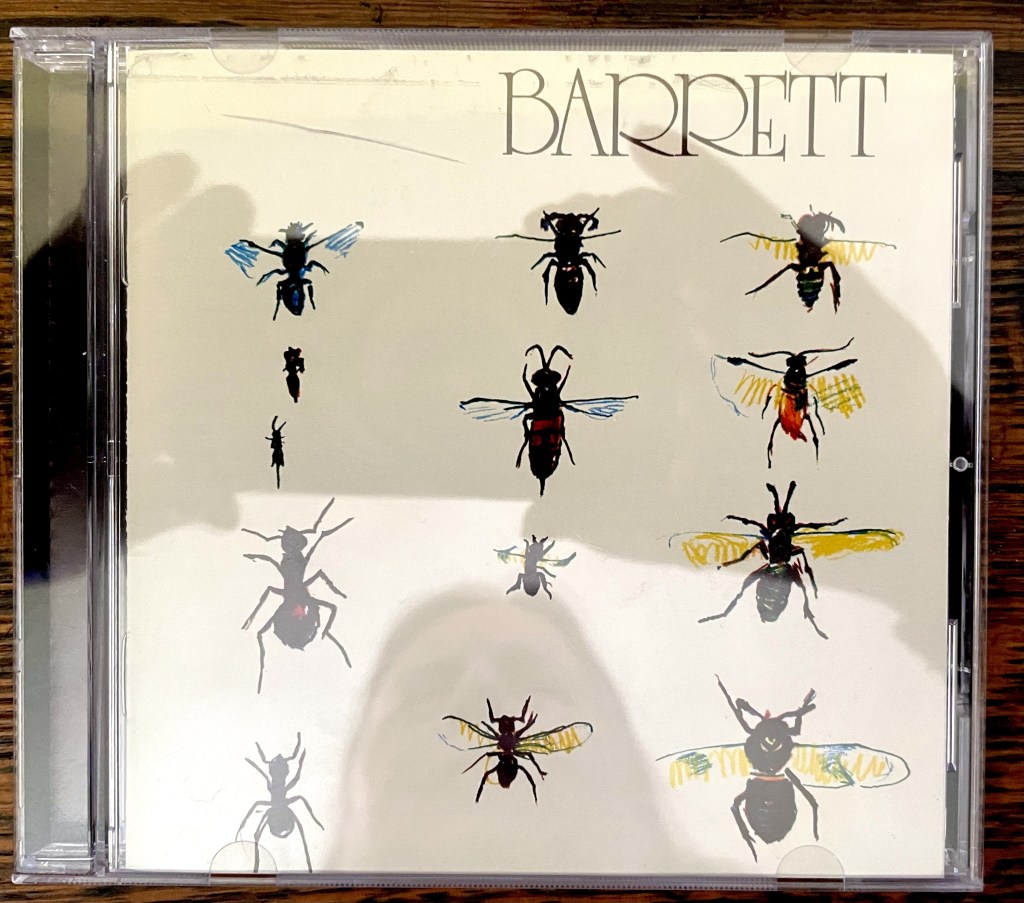
Barrett by Syd Barrett

A reminder of what might have been

Syd Barrett was the original leading light of Pink Floyd, but succumbed to debilitating psychological issues that began around the time of the release of the band’s first album. He left the band under a cloud after a short struggle to continue contributing, and after two erratic solo albums, left the music business entirely. Barrett, his second solo album, was the end of the road for Syd as a recording artist.

It’s sssssooooo wwwwweeeeiiiirrrrrddddddddd, but it’s also surprisingly good considering the problems involved in making it, and different from anything else you might care to name in rock music.

The first thing I think of with Syd’s solo stuff is wild tempo shifts and a casual attitude towards pitch, but there’s less out-of-control-ness than you might think on Barrett. I mean, it’s loose, at times almost chaotic, but I think Syd was a lot more on top of things for this record than his rep might suggest.

“Gigolo Aunt,” for instance is prime late-sixties pop rock, as is “Baby Lemonade.” The shuffling beats, the psychedelic brightness, the unique phrasing and viewpoint — all are trademark, and testament to Barrett’s distinctive creativity.

The band is Syd on vocals and guitar, Richard Wright on keys, Jeff Shirley from Humble Pie on drums, and David Gilmour on bass and backing vocals. Gilmour and Wright are the producers. At Gilmour’s insistance, Syd plays all the guitars.

Ultimately, it’s both its own thing – loose and immediate, quirky and streamlined – and a reminder of what might have been.
Rush – Feedback

Rush’s covers ep.

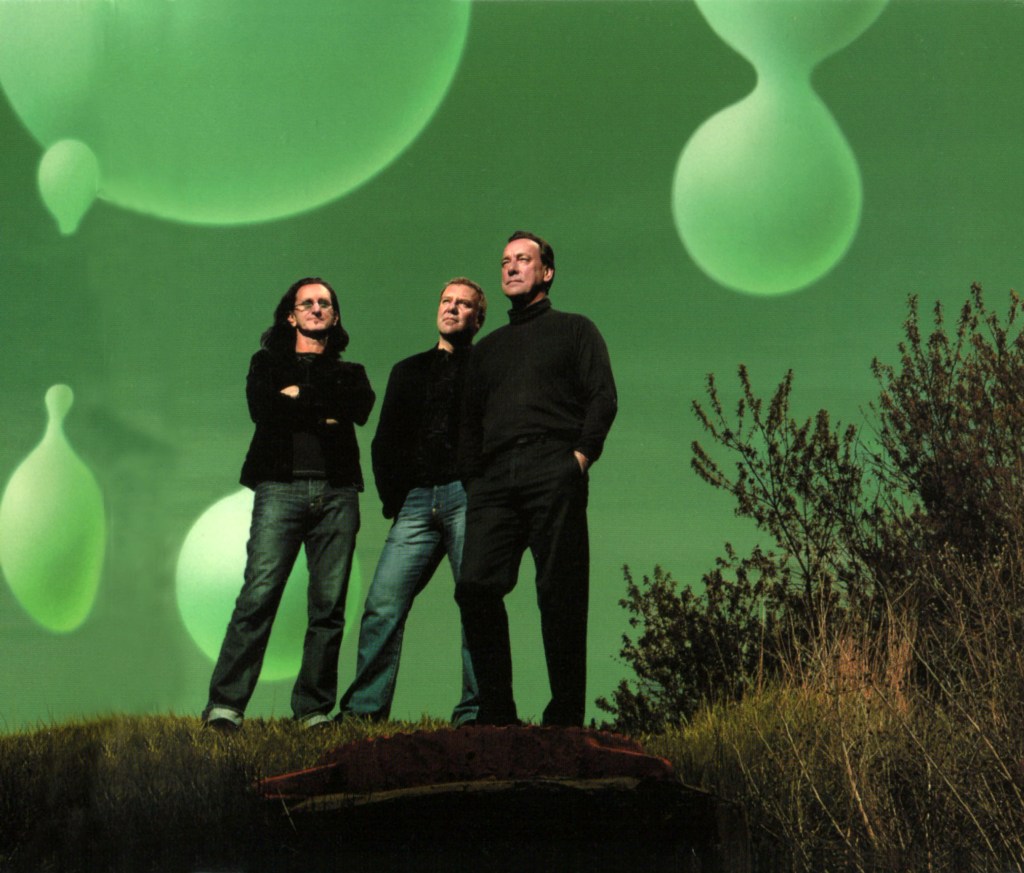
Those Rush guys, on a knoll.

Cleaned the lens off my boom box and put The DonnasAmerican Teenage Rock ‘N’ Roll Machine, and then this. Rush covers eight songs from the late sixties here, from right at the birth of AOR, though everything on the record was released as a single by the originating bands. Ostensibly, these are things they played in their high school bands and early bar band days. It sure sounds like it. Rush had been a band for, like, forty years at the point when they made this record: what does forty years of international touring do for a band? What does a band that has been generating material prolifically for all of that time retain from its origins? Here’s Rush’s answer: everything’s intact and enhanced.

Just in this moment, I’m listening to the silence after a straight-up cover of Cream’s record of Robert Johnson’s Crossroads, still lost in Alex’s record-finale wah wah guitar solo. I’m in awe: it’s fast, clean, and funky, unlike anything in modern rock.

I find that I wish they’d done a couple more songs, so that the final product could have the feel of an album. The sonics are very much of the time when the original singles were of-the-moment. The bands and songs for this record are The Who’s “The Seeker,” The Yardbirds’ “Heart Full of Soul” and “Shapes of Things,” Buffalo Springfield’s “For What It’s Worth” and “Mr. Soul,” Cream’s “Crossroads,” Love’s “Seven and Seven Is,” and Blue Cheer’s “Summertime Blues.” Such a great, if short, list of tunes!

Still, I wish there was a Hendrix song on here, something off of Zeppelin I, or maybe a Vanilla Fudge track (my fantasy track would have been “My White Bicycle”) so that it had the feel of a full album.

What it does have, in spades, is the feeling of a band born in that time. I can just imagine them at a kegger at McGill University doing this exact set, making fiddy bucks and feeling good about it, and I can also imagine them dumping any one these tracks into a live set at any time during their run. This is a revisit of their early days as a cover band, and also a mark of how far they’ve come.

[ED]