Two Nice Albums and Pictures at an Exhibition, part 1

Thoughts about Keith Emerson’s journey from The Nice to Emerson, Lake and Palmer

The Nice’s Five Bridges was recorded in October of 1969 except for one track, and released in June of 1970. The Nice’s Elegy was recorded in December of 1969 and released in April of 1971. Emerson Lake and Palmer’s Pictures at an Exhibition was recorded in March of 1971 and released in November of 1971.

I’m sure I’m not the first person who has noticed that these albums have some strong similarities in terms of material choices and general sound. They seem to me to document an evolution from one band to another, centered on Keith Emerson. I’ve never really understood how the change came about, except within the idea of “supergroup,” which was a persuasive idea at the time in British rock music. Maybe a review of these three records together will help me contextualize things.

(ed. note: I’ve bitten off more than I can chew at one time, so this is going to be a series of articles. I’m going to write about these as a series of sides, since I have them on vinyl. I will try to post these faster than my usual once-a-week schedule.)

Side 1 of Five Bridges

This is a sidelong epic suite, part orchestral, part solo Emerson piano, part rock band. The work is commissioned for the Newcastle Arts Festival and performances were recorded with the London Sinfonia at the Fairfield Halls in Croydon.

It’s not wrong to say that Keith Emerson overwhelms things. In a way, I can see what he was talking about when thinking of the rhythm section of Lee Jackson and Brian Davison not being “virtuosic” enough for what he wanted to do. But at the same time, I appreciate what Jackson and Davison contributed to The Nice. I think the word Emerson was looking for might have been “too understated,” because I love those rhythm section parts, but yeah. You have to admit that they were simpler and didn’t spur Emerson on to be even more excessive.

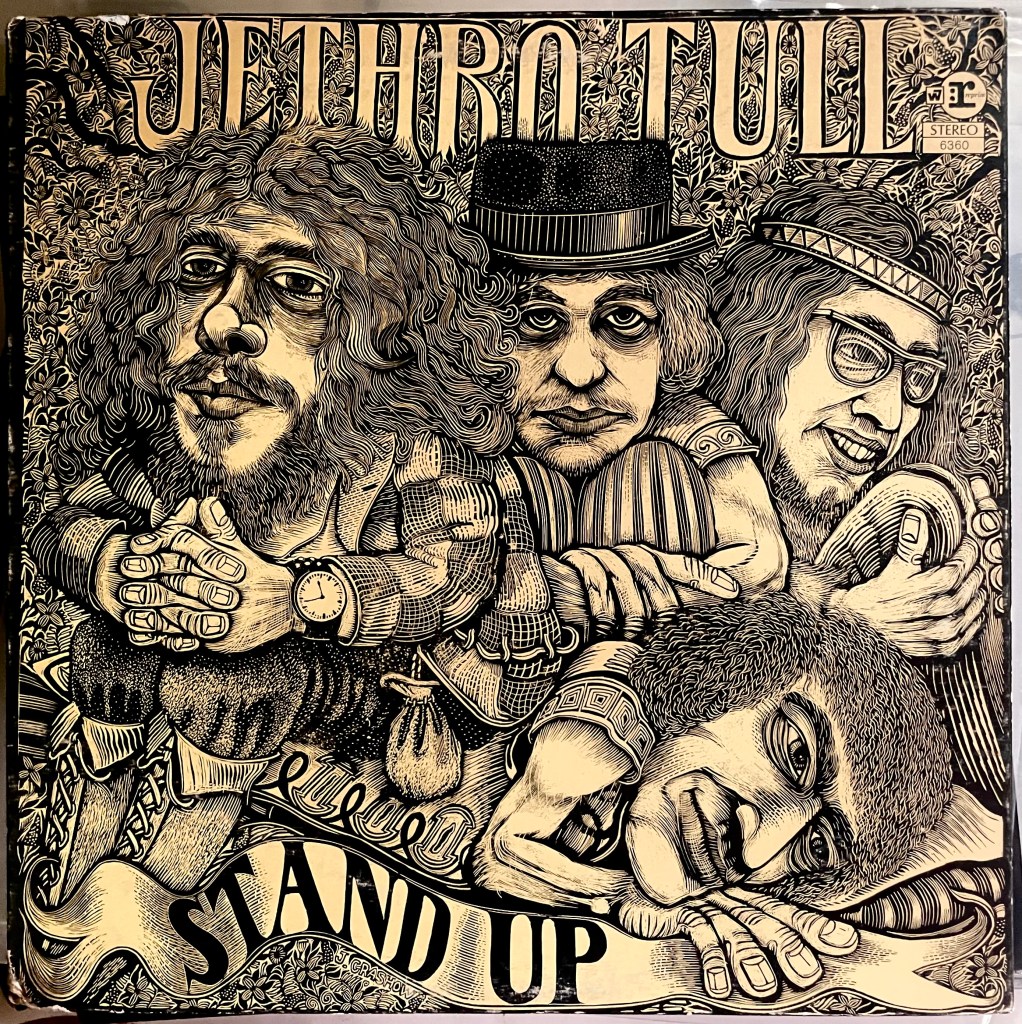
photograph of my copy of the lp "Five Bridges" by The Nice.
My copy of the album in question, featuring an early Hipgnosis cover.

KE was an early proponent of the mixing of classical symphonic music with rock, as evinced here. He uses blues and rock motifs in the orchestral arrangements, complexifies the rock band bits. Prog in general was more successful at advancing the rock aesthetic than the classical. The classical stuff here strikes me as being in the realm of the romantic composers, in much the same way as symphonic film soundtracks are. Emerson uses a bit more repetition than most classical composers do.

I will admit that I don’t think original guitarist Davy O’List would have had much to add here… I think Emerson wanted all of that space for himself, and he certainly makes use of it. The last of the five movements of the piece split the difference between the rock and the orchestra by using a horn section in a way that feels a bit along the line between jazz and motown, with a sort of fanfare towards at end. This feels like a blueprint for what would later happen with ELP, but that’s the point, isn’t it — that it feels a bit prototypical of something that would be more fully realized later.

I have no issue with The Nice. I can see the ambitiousness of Emerson and from the perspective of a non-fan of ELP, I can also see that Jackson and Davison are doing a fine job of keeping up with those ambitions.

I’ll talk about Side 2 of this one in a separate post, which should arrive here in the next day or two.

Please consider liking and commenting on this post. Subscribe if you can – it costs you nothing and helps this site thrive – and share this post with those you know who might appreciate it.

Khn and Klek

Angine de Poitrine went viral last month and are currently taking up lots of space in my brain, so let me broadcast my thoughts about it for a bit.

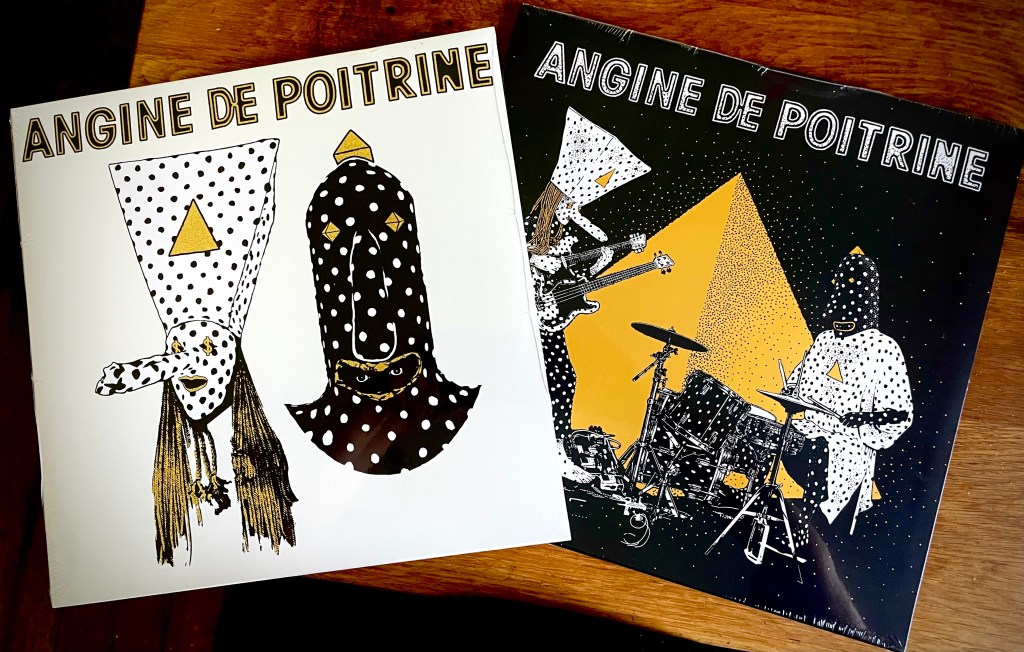
Cover art for their soon-to-be-released second album, Vol. 2

You can find pretty much all of the information available about this band via Mr. Google. I don’t feel much of an obligation to repeat what you can read elsewhere. I recommend looking into this band — they’re doing fabulously creative music and creating adventure and fun at the same time. You can find their music on bandcamp and in various videos posted on Youtube, including the ~30 minute live performance video that brought them to everyone’s attention a month ago. As of this writing, that video has 4.4 muh muh muh million views.

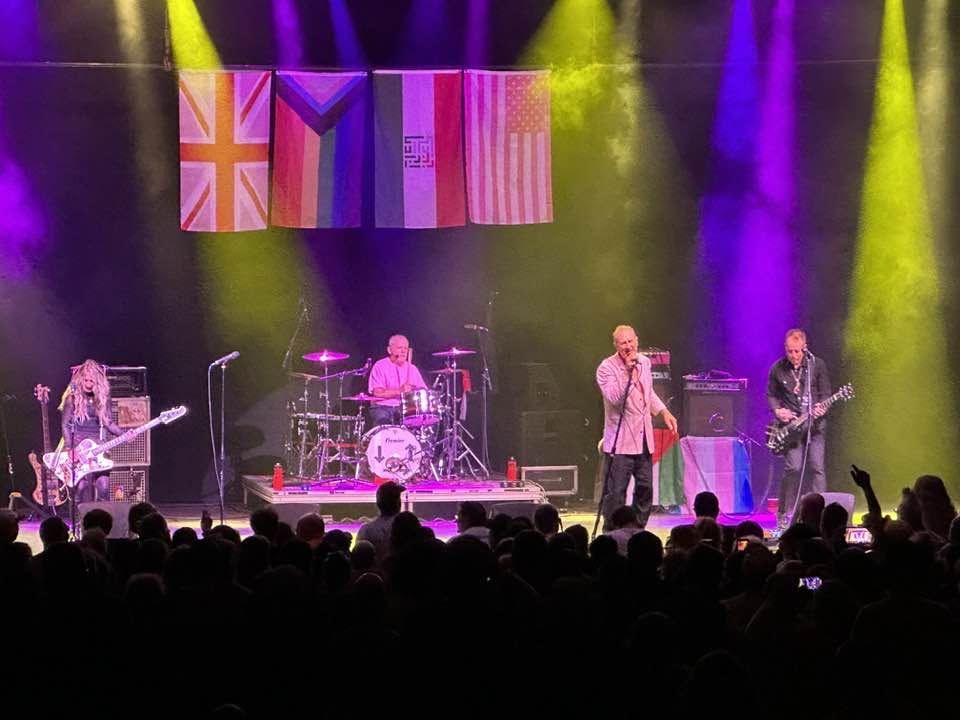
That’s Khn on the microtonal guitar and bass loops, and on the right is Klek the drummer. I don’t see much about the two guys as individuals yet, and that may be because of the sort-of anonymity their costumes allow for. For now, it’s probably sufficient to most new fans that they exist, that they’re on some wavelength frequency vibe thingie that they have deepened thoughtfully and organically and that it’s a wavelength frequency vibe thingie that is insular and unique.

Mostly what I see talked about in the various articles and reaction videos and what-have-yous is the costumes and the microtonal guitars. Which is fine, those are two techniques that are quite worthy of attention. The band’s visuals are deceptively bold and simple, but like so much about this band, clearly result from a great deal of thought. Note how Klek’s headgear brings his physicality up near to level with Khn’s, as an example.

But more centrally, here’s Music Theory Youtuber David Bennett discussing the strategies the band uses to keep their microtonal music from being atonal chaos, and instead actually pleasing to western ears:

Music like this comes from years of work and intense thought about what will work, and Khn and Klek have definitely found a winning formula. Propulsive, melodic, adventurous, quirky… these performances are decidedly winsome.

The musicianship level is quite high; incorporating odd time signatures into looping requires a deft touch. It’s also of note that Khn will get to four or even five consonant voicings, or carefully constructed dissonant voicings, as noted in the Bennett video. I also have a great appreciation for Klek’s drumming. Every rock band is only as good as their drummer, and as you might be able to tell, my opinion is that this is a truly great rock band.

There are layers to this project, and I won’t go into them more than I have, because one of the great joys of this experience for me is what I hope to leave for you — the joy of discovery.

lease consider liking and commenting on this post. Subscribe if you can – it costs you nothing and helps this site thrive – and share this post with those you know who might appreciate it.

Steve Hackett – Beyond the Shrouded Horizon

Surprisingly gorgeous, atmospheric rock album

Beyond the Shrouded Horizon was released in 2011 on Inside Out music. It’s Steve Hackett’s twenty-first album.

I love all of the ways this record is its own thing, and yet harkens back to Hackett’s history. It’s very “boomer,” sometimes astoundingly old-fashioned but somehow beautiful even in its most cornball moments.

“Waking to Life” has a harmonic minor motif that’s very nice. I love that he has Eastern European connections in this music.

There are other essays into varied musical styles – The bluesy rock of Prairie Angel and Catwalk, the dense harmonies of Looking for Fantasy – but the central feeling here is mystical, in the same way that blue-hour motif reflected in both the title and the cover photo is.

insert from my copy

One reason this CD appeals is that Karen, my wife, also likes it. She asks me what I’m playing when I put it on, which she doesn’t do for a lot of the music I’m listening to these days. I think she would like Renaissance, which I’m about to start a deep dive into, although she’s aware of Annie Haslam. I think Annie is folk-adjacent enough to appear on her radar.

I love folk too, but I have really felt pulled towards prog and high-energy rock music for the last little while. I think that may have to do with the state of the world. I think i’m hungry for warrior energy, and metal and prog seem to have that energy more than most music.

I do understand “warrrior” energy as “boy music” which I resist on a personal level. I wrestle with that idea a bit, since I prefer to signify on the female side generally, but I feel like this is a time when fighting is the most necessary thing for a world citizen to be ready for.

But a warrior has to be fighting for something, and beauty seems like one of the best things one can fight for. Beyond the shrouded horizon, there may be more beauty to come. I hope there is. But we have to get there.

In the meantime, find beauty where you can.

Please consider liking and commenting on this post. Subscribe if you can – it costs you nothing and helps this site thrive – and share this post with those you know who might appreciate it.

Genesis – Trespass

1970: the year Genesis figured out who they were, and then were forced to evolve again.

The lineup for this album is Peter Gabriel, Tony Banks, Mike Rutherford, Anthony Phillips, and John Mayhew. This is Mayhew’s only album with the band, and Anthony Phillips’ last. It’s the band’s second. I have to say, it casts a spell.

My reissue copy of the gatefold sleeve. The cover’s janky but the vinyl is unblemished.

Trespass is the album that would establish Genesis as one of the world’s very best prog bands — it’s the template for much that came later. By the same token, it follows the template set by In The Court of the Crimson King, Time and a Word, and The Least We Can Do is Wave to Each Other while remaining distinctly a Genisis album.

Anthony Phillips is a more Steve Howe-like guitarist that Steve Hackett is. He’s a classical guitarist, which, granted, Hackett also is, on occasion, but of the two, I think Phillips has a slightly more delicate touch. I admire Phillips’s early solo work very much. this album is packed with some very out-front melodic ideas from Phillips, and Tony Banks has a lighter touch. The general aspect of the band is spritelier.

Peter Gabriel is front and center, as stong and evocative a singer and master of ceremonies as anyone could ask for, a great rock performance centerpiece fully realized, with that trademark sweet, honey-and-cigarettes baritone and finely tuned theatrical sense… And he was so young! He was quite fey on those early records, was he not?

The band also feels more balanced than it did later. At least it’s a *different* balance. Later albums would shift the sonics of the band more towards Banks being dominant, and new guitarist Steve Hackett was often treated like a “junior” member of the band. I wonder what a second or a third album by this lineup would have sounded like if Phillips hadn’t become ill and if Mayhew had found his way into the social circle of the band?

I own this one on CD and vinyl. I seem to be moving towards owning multiple copies of certain records. I also seem to be lacking storage space. I will need to address this issue at some near-future point. Something’s gonna have to give.

I like likes, love subscriptions, and crave comments.

Neon Heat Disease is my jam

What would an all-yankee King Crimson sound like, you ask? Here’s the answer.

Belew/Levin/Vai/Carey

Not to limit myself to a single answer to this question, but Beat is my favorite currently-active band. I hope (they’ve hinted) that they’re working on an album of original music. The primary work here, covering the music of King Crimson’s 80s ouvre, lends itself to a lot of things that I resonate with in terms of a creative approach to rock music.

They have the deepest pocket of any rock band I can think of, and I love their mathy-ness. They’re algo-rhythmic®! I hear the Beatles in this music. King Crimson’s next phase would be more overt about the connection, but the basic sonics of this band harken back in the melodicism, the collaborative writing process between Fripp and Belew, and the exacting approach to arrangements.

On the other hand, I can note the similarity of “Neon Heat Disease” to “Neon Meate Dream of a Octafish” by Captain Beefheart and his Magic Band off of Trout Mask Replica. So.. is 80s Crimson a perfect amalgam of Revolver and Trout Mask with a forward-looking technical bent? I think the case could be made by plunking the needle down on this album.

Tony Levin is the second vocalist on this, and he’s also taken over keyboards from Fripp. He also provided many of the photographs of the band that grace the inside of this triple gatefold and booklet. His presence in this re-imagining of the original music is vital to its success.

Steve Vai’s replacement of Fripp works because there’s a line he treads between copying and originating. He has to honor that huge presence that would otherwise be missing without disappearing as a separate entity. One early indication of how he approached this is his solo in Heartbeat. It sounds like electric erhu. That’s a really cool way to interpret Fripp’s playing and take it somewhere else entirely at the same time, by adding an unexpected third element. There’s nascent world-music ambitions in the 80s Crimson music sourced here, and adding sonics that suggest new contexts is absolutely in keeping.

What Danny Carey adds most significantly here is that he plays all of these songs on a set of acoustic drums. I think the music from the later source albums is greatly improved by this one change. I don’t recall seeing any electronic drums in Carey’s setup from the show (you can correct me if you know different) and the essential liveness of the sounds he provides raises all of the music from the second and third albums up to the sonic level of the first album. I get that Bruford wanted to push the envelope on the sound palate he was using, but this live recording makes an excellent case for the irreplaceability of percussion sounds coming from skin and bone, not curated electrons.

This is one of my most important objects from my move back to analog music. I love vinyl in all its machine-age glory. Carey’s drumming here is evidence for my case. Music must be made by flesh and bone and all of the worldly materials. I fully believe that, and here’s some strong evidence.

Thanks for reading! If you enjoyed this, please leave a comment and a like, and as always, subscriptions are welcome and encouraged!