Jethro Tull’s Second Album

In which The Ghost of Mick Abrahams is exorcised.

I’m working my way through the Jethro Tull catalogue, one record at a time in chronological order. This Was was a shock to me, because it sounded like a different band entirely. All they changed, on the most physical level, was to switch out their guitar player. On a policy level, Tull became Ian Anderson’s baby. That narrowing and defining of leadership led to a huge expansion of the band’s artistic territory.

I can’t know this for sure, but I suspect that Mick Abrahams left Jethro Tull under a cloud. In the context of the band, he needed to be saged out of the space. Not to keep anyone in suspense or anything, but they 100% accomplished their goal. MA is pretty much a footnote in the Tull story, an early fork in the road. They become Tull as we know them on Stand Up.

In fact, by the third song on side one, the Brubeck-inspired “Bouree,” we’re already so far beyond the blues rock of what’s-‘is-name that the clock can never be turned back, and it becomes completely unfair of me to link everything that happens here to that guy.

But even though a listener who only had This Was as a reference point would feel his absence throughout, one would also hear the future. A great future. This album led to Benefit, and Benefit led to Aqualung, and everything that followed.

And Mick Abrahams could never have been the guitarist for Stand Up or any record that was made by Jethro Tull afterward. Martin Barre blows him out of the water, all while acknowledging that Ian Anderson is the boss. Where Abrahams wrote about half of the previous record, all of the songs here are Anderson’s, and collectively an upgrade from what had come before.
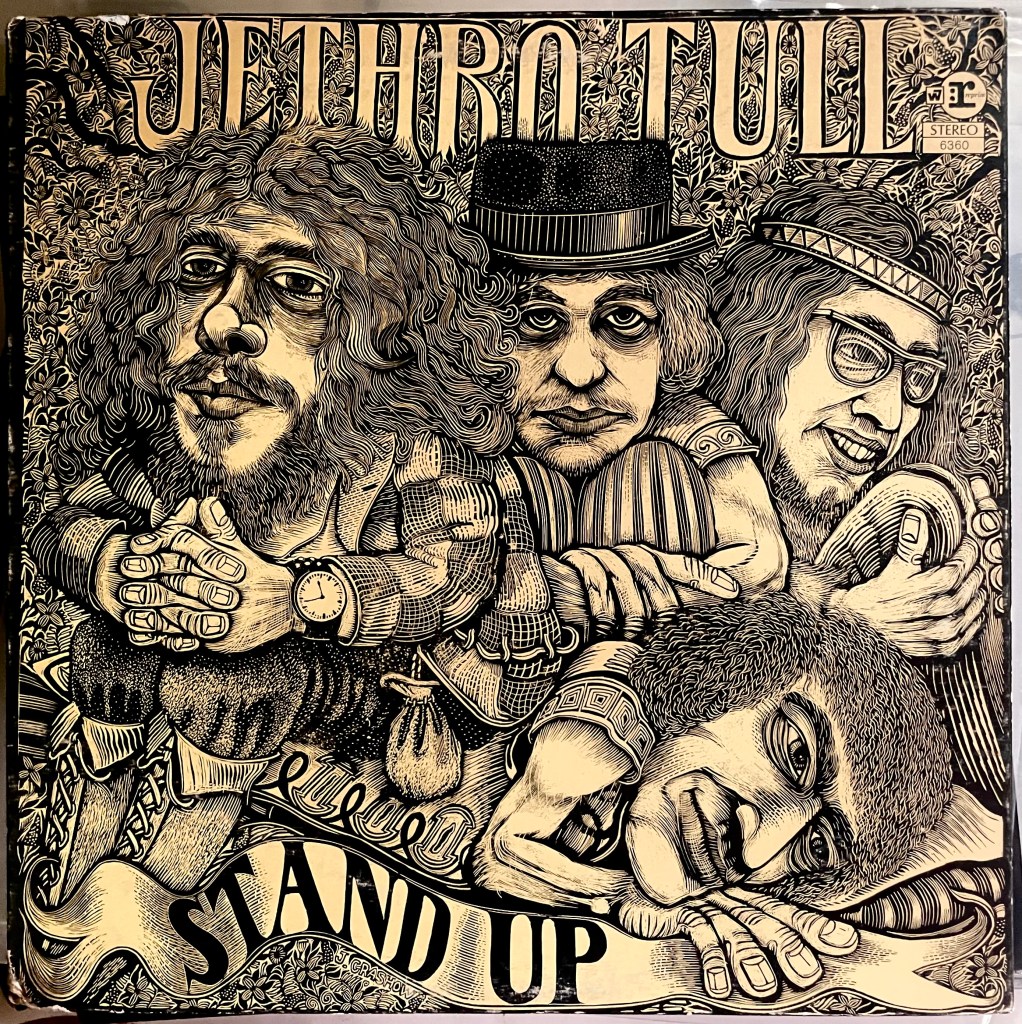
That’s Martin Barre in the middle, making eye contact with you. Hi, Martin! Photo of my copy of Stand Up by me.

While the Ghost of Mick hangs over this record, by the end of it, the listener is only looking forward, not backward. The band virtually never went back to the blues rock well from which This Was sprang.

And that’s what I like most about that time in rock music, bands grew and developed. Each new album was a chapter in the larger story arc. Taking a big chance such as completely redefining a band’s approach could be either a horrible disappointment or a thrilling expansion of what a band could be. It may be true that in most cases it would be the former, but in this case, it’s absolutely the latter.

So many bands went through these changes around that time. Yes booted Peter Banks in favor of Steve Howe. Genesis lost Anthony Phillips but added Steve Hackett and got Phil Collins in the bargain. In the larger context, the music was changing, but this round of changes seems to have codified things in such a way that they began to become stagnant. Less than a decade later, all of these revisions up in quality became an unassailable status quo which necessitated a revolution.

From this decades-later standpoint, one can see that things were both gained and lost amidst all the changes… as they always are.

Here’s to change. We all need it, from time to time.

Please consider liking and commenting on this post. Subscribe if you can – it costs you nothing and helps this site thrive! Also, do be a dear and share this post with those you know who might appreciate it!

Zeitgeist 7/14/26

I feel like I have an obligation to dig into this whole Graham Platner debacle, considering how enthusiastic I’ve been about him.

I had thought to write a bit about a Jethro Tull album for this week, but I’ve trashed that post. I might write about it again at some point, since I am interested in the evolution of that band over its many decades of existence. Every band is a story, and Jethro Tull has fascinated me for years. This observation idea of mine is a chance for a deeper dive and I will definitely take that opportunity.

But what I feel like I have an obligation to dig into right now is the whole Graham Platner debacle. Regular readers of this blog (if such a beast exists outside of my imagination) will remember that I have posted about that dude with enthusiasm on more than one occasion.

And then this week we learned that he probably is the horrible person the oppo researchers have so wanted him to be this whole time. Yes, most likely he’s a rapist. I’ll tell you straight up. I’ve been made aware of the incident’s particulars and it really does seem like he’s done a terrible thing, dehumanized a woman, and lived in denial of that fact for years – denied it so hard he thought he could deny it right into a seat in the US Senate.

And until the facts of this case surfaced, I was absolutely on his side, even though there were a few other rumblings in the oppositional noise to suggest that he had this tendency. Because that’s the nature of elections in this country. Throw dirt at your opponent and hope some of it sticks. In this case, it really did, like a fork in a roast turkey. Goddammit.

I’ve been listening to The Pretty Reckless a lot lately. They’re a fabulously arty punk/rock/pop band with a decidedly modern flair. Taylor Momsen is blowing my mind, tbh. At different times, they’ve tickled my particularly generation jones ear with a redolence of Gun Club, Zep, Kelly Clarkson (this is a compliment, goddammit,) X, mid-seventies Floyd, and Jobriath. In short, they’re brilliant. The cover art for this new album, Dear God pt. 1, is spectacular. I have the indie-variant vinyl, which is, I think, the proper format for this album.

But the thing with this whole Platner situation is that… Platner constantly said to his audience, “This is not about me, it’s about YOU!” and the fact is, that is the way every US pol should think. One of the things that really made Platner click with people is that he understood that money being the biggest influence in our politics these days needs to end. I think he also campaigned on the terminality of the cult of personality. We should vote for the politicians who say and feel like they will follow through with policies that will help working people.

I think I need to reiterate, at this point, that Graham Platner is not an acceptable or viable candidate. He has **** of his own that he needs to deal with now. And seeking the approval of the public while he goes through this is… anathema.

But whoever replaces him on the ticket should reflect the values of the voters who supported Platner. The next candidate should:

  • work to abolish ice
  • address the corruption on the supreme court and in the federal government generally
  • fight for medicare for all
  • campaign for a living wage and affordable housing
  • strongly oppose the Israeli genocide against Palestinians and Lebanon
  • And the same for all forever wars.

In short, he campaigned as a representative of working Americans. That needs to not be lost, and the next person who takes up the mantle of Democratic nominee for that senate seat should have the same positions.

We’re about to start our third heat wave in as many weeks here. That seems to be going on in a lot of places. The planet’s clearly out of whack, due to stupid human activity. I’ve been hearing that we’ve crossed the line, and that no matter what we do, we’re about to face climate disaster. And yet we’re in the middle east fighting for oil and against human decency. It all makes me wonder if humanity can survive its own greed and thickheadedness. I don’t have an answer for you about this. Time will tell, if there’s anyone to listen.

The best things about Summer are home grown tomatoes and ice cream. I wish you plenty of both!

Some of Karen’s tomato haul from last year. Photo by me.

Please consider liking and commenting on this post. Subscribe if you can – it costs you nothing and helps this site thrive – and share this post with those you know who might appreciate it.

Rush – Feedback

Rush’s covers ep.

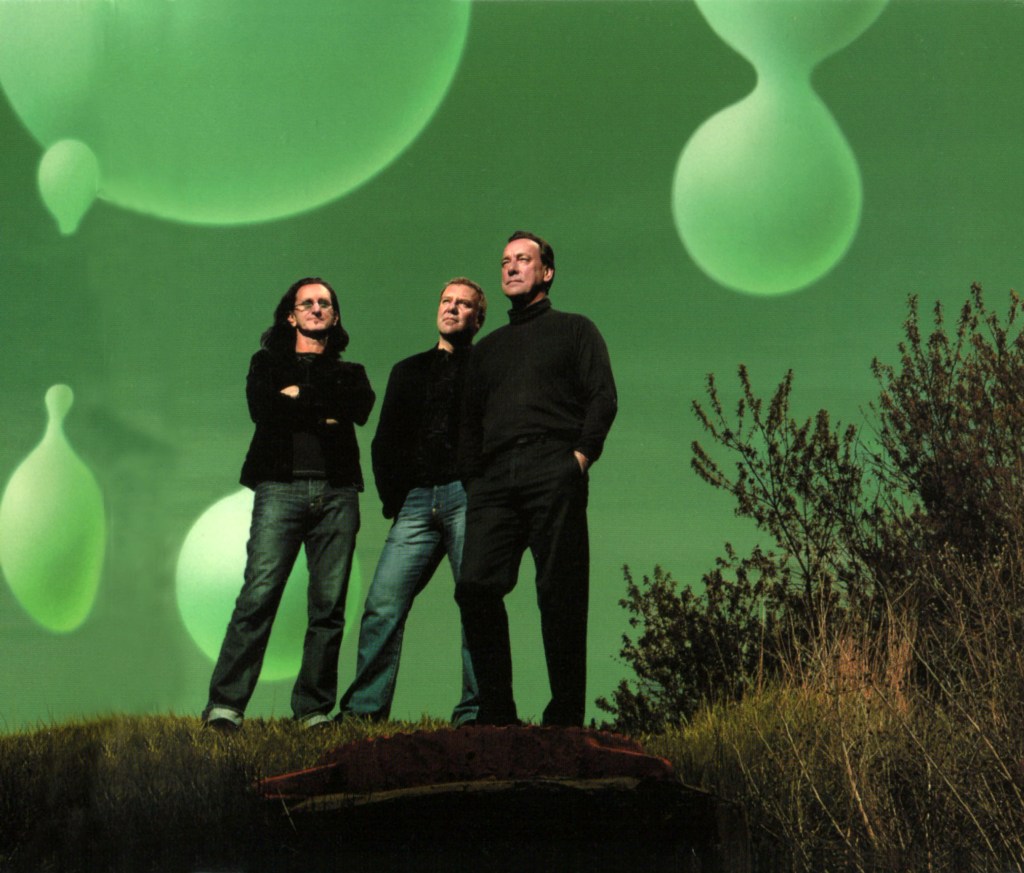
Those Rush guys, on a knoll.

Cleaned the lens off my boom box and put The DonnasAmerican Teenage Rock ‘N’ Roll Machine, and then this. Rush covers eight songs from the late sixties here, from right at the birth of AOR, though everything on the record was released as a single by the originating bands. Ostensibly, these are things they played in their high school bands and early bar band days. It sure sounds like it. Rush had been a band for, like, forty years at the point when they made this record: what does forty years of international touring do for a band? What does a band that has been generating material prolifically for all of that time retain from its origins? Here’s Rush’s answer: everything’s intact and enhanced.

Just in this moment, I’m listening to the silence after a straight-up cover of Cream’s record of Robert Johnson’s Crossroads, still lost in Alex’s record-finale wah wah guitar solo. I’m in awe: it’s fast, clean, and funky, unlike anything in modern rock.

I find that I wish they’d done a couple more songs, so that the final product could have the feel of an album. The sonics are very much of the time when the original singles were of-the-moment. The bands and songs for this record are The Who’s “The Seeker,” The Yardbirds’ “Heart Full of Soul” and “Shapes of Things,” Buffalo Springfield’s “For What It’s Worth” and “Mr. Soul,” Cream’s “Crossroads,” Love’s “Seven and Seven Is,” and Blue Cheer’s “Summertime Blues.” Such a great, if short, list of tunes!

Still, I wish there was a Hendrix song on here, something off of Zeppelin I, or maybe a Vanilla Fudge track (my fantasy track would have been “My White Bicycle”) so that it had the feel of a full album.

What it does have, in spades, is the feeling of a band born in that time. I can just imagine them at a kegger at McGill University doing this exact set, making fiddy bucks and feeling good about it, and I can also imagine them dumping any one these tracks into a live set at any time during their run. This is a revisit of their early days as a cover band, and also a mark of how far they’ve come.

[ED]