Intentional Cruelty

Why Are There Now Concentration Camps in the US?

Recently, I read that there are 70,000 people being held in ICE detention centers around the country, and that there have been over 1,000 human rights complaints lodged against ICE in the last year. At least 30 people have died in ICE custody in that amount of time.

What is it about the makeup of human beings that allows us to be horrible to each other? Big imaginations with no bounds on them? Our vision bigger than our hearts? Can it be that we just… can imagine enjoying being that cruel?
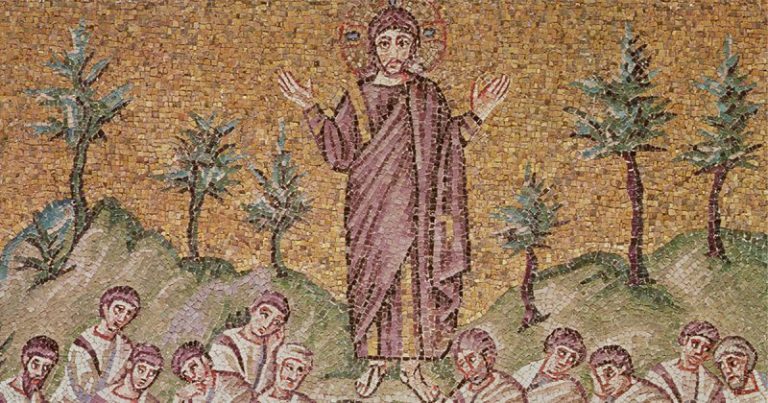
Eastern Roman mozaic depicting the Sermon on the Mount, located in Ravenna

It strikes me that the people who enjoy torturing others are the people with the least amount of imagination. They have parameters for acceptability, but somehow those parameters include… torturing, killing, creating human misery. Why? You won’t be surprised, I hope, to hear that I haven’t got any answers: only questions.

Lately, the name Phineas Gage has come to mind quite a bit for me. You might remember him from your Psych 101 course. He’s the railroad worker who got into a terrible accident in which a railroad spike was driven through a region in his brain. The story goes that he recovered, but was a changed person: cruel, violent, always angry! whereas before the accident he was kind and even generous.

Think about John Fetterman, who had been a well-thought-of Berniecrat, but who had a massive stroke during his Senate campaign. Now he’s the most conservative member of the Democratic caucus. Is it possible that conservatism comes about as a result of brain trauma? I’m sure that’s a vast oversimplification, but it’s something that I think about. Fetterman is far from my only example.

I’m sure you can come up with examples of people who were kind at some younger phase of life, but who later fundamentally changed. Maybe you can pinpoint when something changed for them? Not always, I’m sure, but I imagine that, like me, you know of certain marks in one personal history or another.

And I’m not suggesting that the only reason that people become reactionary and harshly conservative is neurological. But maybe it plays a role.

Also, why do so many of the people who are creating all of this cruelty claim to be Christians? How can the followers of the guy who proclaimed The Beatitudes be so far from those principles? And being far from those principles, how can they expect us to follow them into their depravity? why do they demand it with the ferocity that they do?

I’m flummoxed: desperate to find some answers and a path forward.

Please consider liking and commenting on this post. Subscribe if you can – it costs you nothing and helps this site thrive – and share this post with those you know who might appreciate it.

Personal Blog #203 Part 11: Sunny Southern Colorado

Why the Mountains Are Always to the West.

IMG_1261

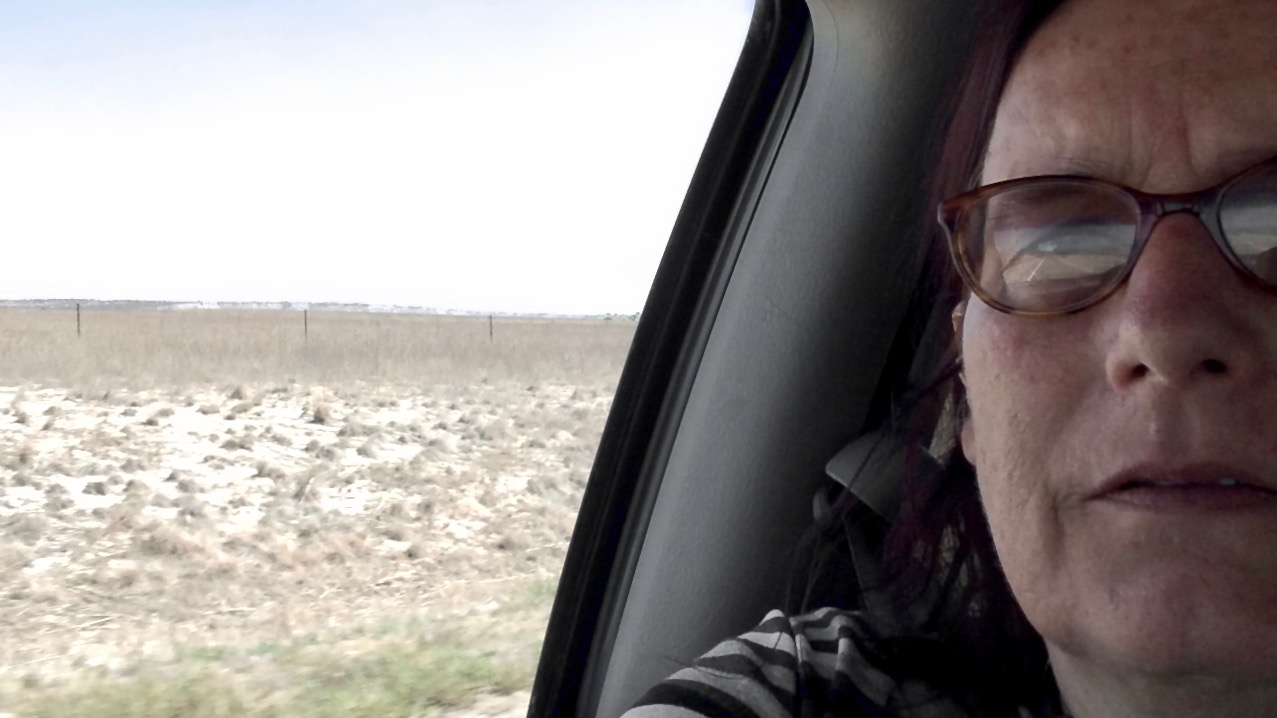
This is me riding shotgun through what was once called The Great American Desert, though it’s really a steppe, the eastern slope of southern Colorado. Much of my childhood was spent in this country, though I have not lived there since my freshman year of high school.

Sage, cactus, and grasses are a threadbare cover to the land I grew up on. The mountains are a grand presence in the west, impressed upon me to the point that any time I encounter mountains, no matter how they are actually oriented, the lizard part of my brain automatically labels the direction of those mountains “West.”

I still have family there, so I still go back. I’m glad that I do, because I love Colorado. I love its clear night skies and summer thunderstorms. I love being in the mountains south of Florence, where my Mother spent part of her childhood, in a dirt floor cabin, going to school in a one-room schoolhouse. My very favorite wildflower in the world grows in meadows around where my mother grew up. It’s called Indian blanket, and its ragged beauty is extravagant.

Indian Blanket

My roots in the Arkansas Valley run deep. My grandparents are buried there in the Fowler Cemetery.

IMG_3455

My brother and mother live there now. Though I haven’t lived there in decades, no place on Earth better deserves the appelation, “home.”

My Third Short Poem Week

winter haikus

I did a couple of poetry weeks last season and enjoyed them immensely, so I thought I would give it another go. The first form I tied was the American Sentence: the second was a Welsh quatrain form called Englyn Cyrch. One of the things that spurred this return to short form poetry was that someone tweeted out one of my Englyn Cyrch last week.

I enjoy the “mathy-ness” of short poem forms. When you only have seventeen or twenty-some syllables to say a thing, you have to choose every word carefully. My intention is to make these particular very formal styles sound as conversational as I can. Sometimes I even manage it! When I applied to Lesley’s MFA program, my cover letter was intentionally exactly 500 words long. It would have come off as cheesy if any of the language had seemed forced, but I don’t think it did: I got accepted into the program, at any rate, and have since graduated with an MFA in creative nonfiction.

Having done other sorts of short poem, I thought I would take this opportunity to try my hand at not haikai, not hokku, but haiku. I find, as I research the form, that to this point my “haiku” have been more a variant of the American Sentence than actual classic haiku. There are a couple of rules that I forgot, though I remember being taught them in elementary school. To wit:

  1. A haiku should be about a particular season.
  2. It should contain a single image
  3. It should evoke a particular emotion
  4. For my purposes here, at least, there should be no enjambment

In addition to the math, there are content rules! That sounds like fun, and it turns out it is, though it may not seem that way considering how dark these haiku are turning out to be. I hate winter: I tell everybody I’m Seelie, and it is definitely that half of the year — between Beltane and Samhain — when I am happiest. I experience seasonal affective disorder and I’ve sometimes been very depressed in the cold, dark months. Consider these haiku my attempt at catharsis.

If you’re feeling inspired, I invite you to post your own haiku in the comments here. And keep an eye out: I’ve invited a couple of friends to contribute a haiku each. Kelly Fig Smith‘s poem appeared earlier today, making her the first person other than myself to contribute to this blog. Tomorrow, Stacy LeVine‘s haiku will grace this page. I’m very excited to share their work with you.

Happy Thanksgiving

I’m traveling today, and my suspicion is that not too many eyes will fall upon these words, as this is not the sort of day when people surf the web looking at blogs by fledgling writers. I will keep this short, in case these words do reach you somehow. I don’t want to keep you.

I live in Massachusetts, where this whole tradition began, under a dark, bloody cloud. I’ve attended the National Day of Mourning in Plymouth. I know some of the history of King Phillip’s War and its aftermath. So much of the history of this country I call home is built upon horror and hatred, wholesale misery and profound suffering.

For my family, as it likely is for yours, this day has been and continues to be about togetherness and appreciation, and maybe a little bit about overzealous eating. I embrace this tradition, because it’s a good and important thing to do — to honor family and to be thankful.

But we should also remember King Phillip, and the churchgoing Indians who were the first and most devastated victims of the war that bears his name. We should remember a time two hundred years later, when Chief Joseph and the Nez Percé, ran for their lives across the frozen Northwest, starving at the same time that American families were having Thanksgiving feasts, thanking the Lord for the bounty they had, not even knowing the name of King Phillip. If they thought about Chief Joseph at all, those thoughts were not in any way warm with gratitude, or tinged with remorse.

They should have been.

Perhaps we can hold some humility in our hearts along with our joy? Perhaps we can also hold to some vision and some intention towards a better, more inclusive, more compassionate future? We can’t change the past, but what if we do these things?

  • Remember your loved ones, and in that context, remember the value of human life.
  • Share what you have with those around you. This is the spirit of family that I remember as the central tenet of so many Native American tribes.
  • Remember the price that has been paid for this bountiful life. It is the debt that goes with the gratitude of the day.

May you be blessed, and may you recognize your blessings and where they’ve come from.

In that spirit, I thank you for your attention to these words.

The End of an Empire

In the example of the medieval Roman Empire, I see lessons for us in the modern era.

It took centuries for the Byzantine Empire to fall. In fact, Constantinople was sacked on 4 separate occasions: in 1081 when Alexios I Komnenos wrested power from Nykephoros III Botaneiates, in 1204 when the Latins — agents of the Holy Roman Emperor in Rome — took the city from the Byzantines, in 1261 when the Nicaeans under Michael VII Palaiologos retook the city and made it once again the seat of the Empire, and then in 1453 when Sultan Mehmed II finally ended the Roman Empire for once and all time.

I have been thinking about the process by which the Empire failed, and trying to contextualize what happened nearly six hundred years ago against what is happening here and now, in the US. There are a few points I linger over: things that cause me both trepidation and hope.

When Alexios came to power, some of the factors that led to the demise of the Empire were already in place. The Empire had been stable for centuries in part because succession to the throne was generally orderly. Alexios took power by coup: he had been a successful general, and from that platform was able to raise enough support from the army to mount an attack on the capital. For most of the history of the Empire to that point, civilian and military leadership had been kept separate. Alexios was one of a stream of Generals to have risen to power in the years preceding his ascension to the throne. One thing that can be said of Alexios is that he fostered a period of apparent stability: he himself held power for almost 40 years, and his next two successors had similar reigns.

In addition to altering the power structure of the Empire, Alexios also created a situation, out of apparent necessity, which contributed greatly to the eventual demise of the Empire. The Emperor Nykephoros, whom he had supplanted, had drained the Empire’s finances. At the time that Alexios took power, the Empire was facing an invasion threat from Robert Guiscard, a Norman who had risen to power on the Italian peninsula and then set his sites on the throne of the Byzantine Empire. In order for Alexios to meet the threat of invasion by Guiscard, he had to negotiate help from another foreign power: the Venetians, who had a substantial navy. He made certain promises to them, including the privilege of importing and exporting goods to Constantinople without paying any tax. The Venetians also gained control of a section of the capital. Eventually, similar deals were made with other Italian city-states, including the Genoans, and the Pisans. This caused the Empire to lose a crucial revenue stream, and they were never able to recover from the loss. In the end, it also gave the Latins entrée into the city so that they could take it from the Byzantines themselves in 1204: the second sacking of Constantinople.

Yet even from this, the Empire was eventually able to reconstitute itself for a time. Remember: they were Romans. That identity sustained them through some serious crises, and even an apparent collapse. I don’t wish to draw the parallel too closely, but my take on this story includes the suggestion that a great country like the Byzantine Empire, or the United States, does not fall easily or quickly.

That demise the Byzantines ultimately faced at the hands of the Ottoman Turks was centuries in the making. Perhaps the alarmists and naysayers in our own time are too pessimistic. Perhaps this country is not so near its end as they might suspect. And perhaps, given the will and the force of commitment to our better natures and our strengths as a nation, we might yet survive and even thrive in the coming centuries.