Rush – Feedback

Rush’s covers ep.

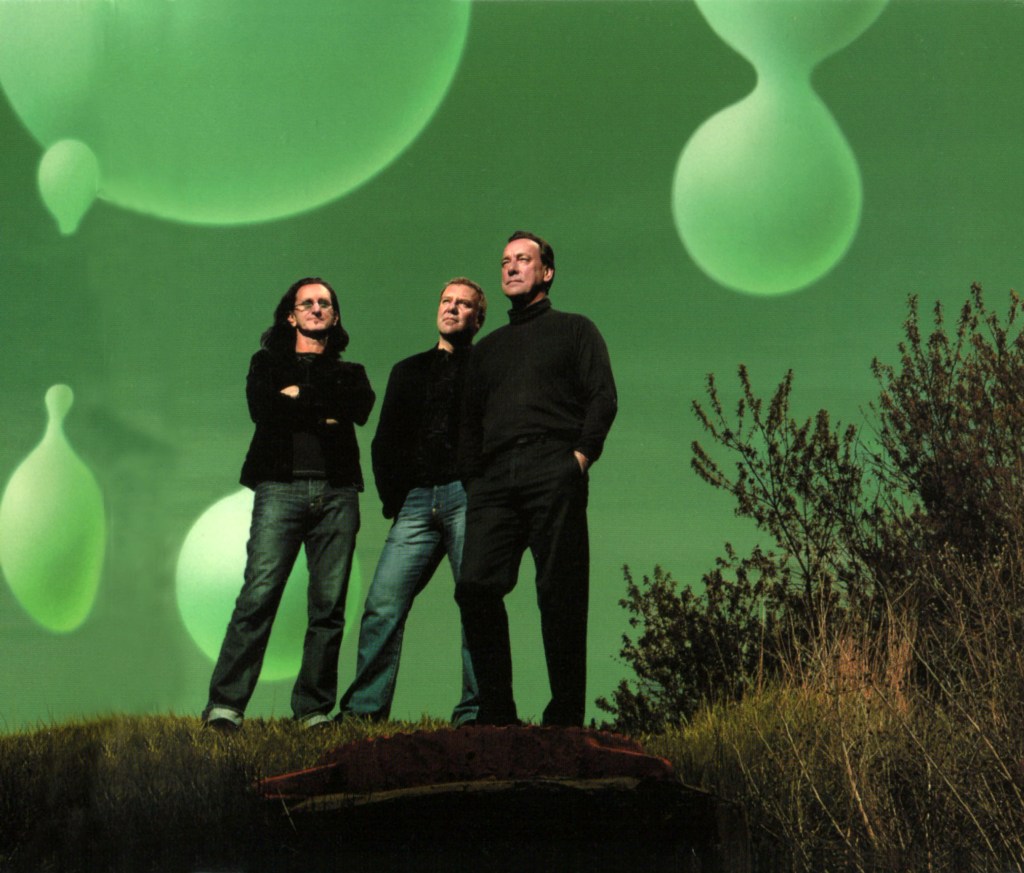
Those Rush guys, on a knoll.

Cleaned the lens off my boom box and put The DonnasAmerican Teenage Rock ‘N’ Roll Machine, and then this. Rush covers eight songs from the late sixties here, from right at the birth of AOR, though everything on the record was released as a single by the originating bands. Ostensibly, these are things they played in their high school bands and early bar band days. It sure sounds like it. Rush had been a band for, like, forty years at the point when they made this record: what does forty years of international touring do for a band? What does a band that has been generating material prolifically for all of that time retain from its origins? Here’s Rush’s answer: everything’s intact and enhanced.

Just in this moment, I’m listening to the silence after a straight-up cover of Cream’s record of Robert Johnson’s Crossroads, still lost in Alex’s record-finale wah wah guitar solo. I’m in awe: it’s fast, clean, and funky, unlike anything in modern rock.

I find that I wish they’d done a couple more songs, so that the final product could have the feel of an album. The sonics are very much of the time when the original singles were of-the-moment. The bands and songs for this record are The Who’s “The Seeker,” The Yardbirds’ “Heart Full of Soul” and “Shapes of Things,” Buffalo Springfield’s “For What It’s Worth” and “Mr. Soul,” Cream’s “Crossroads,” Love’s “Seven and Seven Is,” and Blue Cheer’s “Summertime Blues.” Such a great, if short, list of tunes!

Still, I wish there was a Hendrix song on here, something off of Zeppelin I, or maybe a Vanilla Fudge track (my fantasy track would have been “My White Bicycle”) so that it had the feel of a full album.

What it does have, in spades, is the feeling of a band born in that time. I can just imagine them at a kegger at McGill University doing this exact set, making fiddy bucks and feeling good about it, and I can also imagine them dumping any one these tracks into a live set at any time during their run. This is a revisit of their early days as a cover band, and also a mark of how far they’ve come.

[ED]
More Weird Music I Listen To

Musing about my latest obsessive listening habit

I’ve been on a Cluster kick of late. This after a Black Sabbath phase and then an early Cure spree.

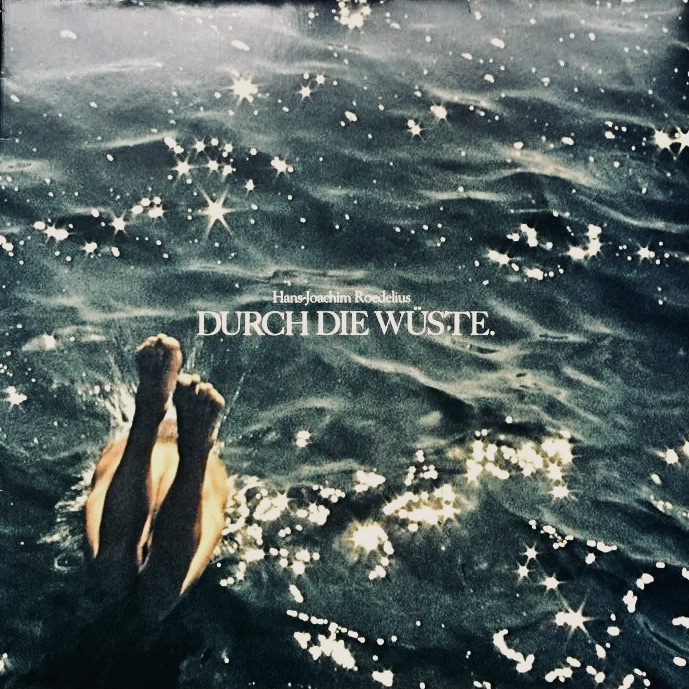
If you don’t know, Cluster is a German minimalist experimental duo that was most productive in the 1970s, having derived out of a trio called Kluster but continuing on through the two-thousands, until Deiter Moebius died in 2015. The other half of the duo, Hans-Joachim Roedelius, is still with us, still releasing new music at the age of 86. I’ve been listening to them since the late 70s, having discoveren their experimental, particular/peculiar sounds after being introduced to their records by a friend in his college dorm room over herbal supplements of a recreational type common to the college dorm rooms of the time. In fact, listening to their music can sometimes invoke strange sense memories for me; recently I was listening to Roedelius’s solo CD Durch Die Wüste and suddenly I had the smell of bongwater in my nose (I do not own, and never have owned a bong. My college friend, however, was a major proponent of the water pipe as a delivery device for the smoke of herbal supplements of that recreational type we were both fond of.)

I’ve also listened to Cluster 71, their first album after Conrad Schnitzler left the group, Zuckerzeit, and Grosses Wasser, plus Roedelius’s Offene Türen, all pretty much consecutively. Each of these albums is unique. Cluster 71 is distorted, droney soundscapes; Zuckerzeit is proto-electro IDM, a real precursor to that style and very influential; Grosses Wasser is disciplined, calm like water but still quite catchy, possibly my favorite of their output; Offene Türen is dramatic and fiery, almost Kurt Weil-like, though still simple, and centered, as all of Cluster’s music is, on the idea of the minimal drone; and the above-pictured album is, once again, a unique experience, a blending of a mid-seventies rock aesthetic and Cluster’s distinctive drone. If you come to DDW after being familiar with much of the rest of this ouvre, it will surprise you, as it did me, by being very far from what one would expect from them, but completely within their unique wheelhouse.

You may have noticed that I am not distinguishing much between Roedelius’s solo work and Cluster as a group. I know that may be confusing, but the sensibility of all of this music is so insular and distinctive that it really is a thing unto itself. I would also include Moebius’s solo work and outside collaborations from both band members either collectively or apart from each other, such as the band Harmonia that is the two members of Cluster and Michael Rother, guitarist from peer German minimalist band Neu! and other efforts as well. It all feels of a piece to me: a sound that is sometimes imitated, but original and definitely belonging to Moebius and Roedelius. It embodies early electronic music, a kind of progressive rock aesthetic, classic minimalism that can extend backward in time to the work of Erik Satie, and also sits off to its own little sideline. Some have also called it “new age” but I would beg to differ, because the point of this music is less to calm and center than to open and challenge. It creates a space that can be meditative, but it contains discord and plays with expectations in a way that any music I would think of as “new age” studiously avoids.

Don’t be surprised if I write about this band and its various offshoots again (and again), they’re seminal to my tastes in music.

[ED]

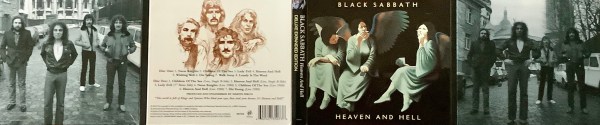
Object 3: Heaven and Hell By Black Sabbath Deluxe Edition CD

My friend James began a project of writing about each Black Sabbath album in order, based on one quick listen to each from Spotify. He was going to do one a day. He’s stalled after their fifth album, Sabbath Bloody Sabbath. I want to talk about Sabbath, but I can’t do a series on every Sabbath album because I would have the same problem as James, stalling out somewhere along the way. I’ll talk about a couple of their albums, though. I present this first commentary as part of my Objects series.

I have been having a bout of obsession with this band. A few months ago I rebought Masters of Reality for the song “Children of the Grave,” which has long been my favorite of their songs. Tucson punk band Just Us covered it, as I recall, bassist Paneen claimed it was “the greatest punk song ever written” and I have to agree with the sentiment if I can’t back it up as a statement of fact.

Around this time (early to mid 80s), I was listen to Heaven and Hell in relatively heavy rotation. I didn’t think abut it from a genre perspective, even with Paneen’s comment in my head, but lately it’s come back to me that there is a significant commonality between what Black Sabbath has always done and what every punk band I’ve ever played in did in terms of attitude and songwriting process. From my far-after-the-fact perspective, I must admit that Sabbath both elevated that ethos and served it well. Lately, I’ve come to think of them as the idealized version of the band I’ve always wished to play in.

Heaven and Hell was the first album the band made after firing Ozzy Osbourne. I was among the many who thought that Black Sabbath was probably over with as of his departure, but this album inpressed me. Reading the liner notes to this edition I learned that they wrote Children of the Sea at an afternoon jam session the first day they met with Ronnie James Dio. They sound like a band reborn. Guitarist Tony Iommi contributes some of his crunchiest riffs here. The material sounds timeless, whereas the two previous albums had sounded like a band working to “update” their sound. You can hear elements of the poppier direction the band had pursued on their previous album Never Say Die in a couple of the tracks on side two, notably “Wishing Well” and “Walk Away” – both of which are fine songs – but the meat here, the content of their rebirth, was the heavier material: all of side one and “Die Young” from side two especially seem to characterize the throughline from the band’s original sensibility and the new chemistry that came with the addition of Dio.

The live material on the second CD here bears that out. All five songs I point to are the material that made its way to the stage and these recordings.

I like having this album as an object again, and the live tracks, including original Sabbath drummer Bill Ward who departed before the band recorded and toured their second Dio-fronted album Mob Rules, are a welcome addition to my collection. The CD has been on my desk since it came out of the shipping package. I fidget with it, looking at the pictures and layout, reading the liner notes. It’s a token of a former time, a reminder of a dream I once held dearly and haven’t quite let go of.

Pete Shelley

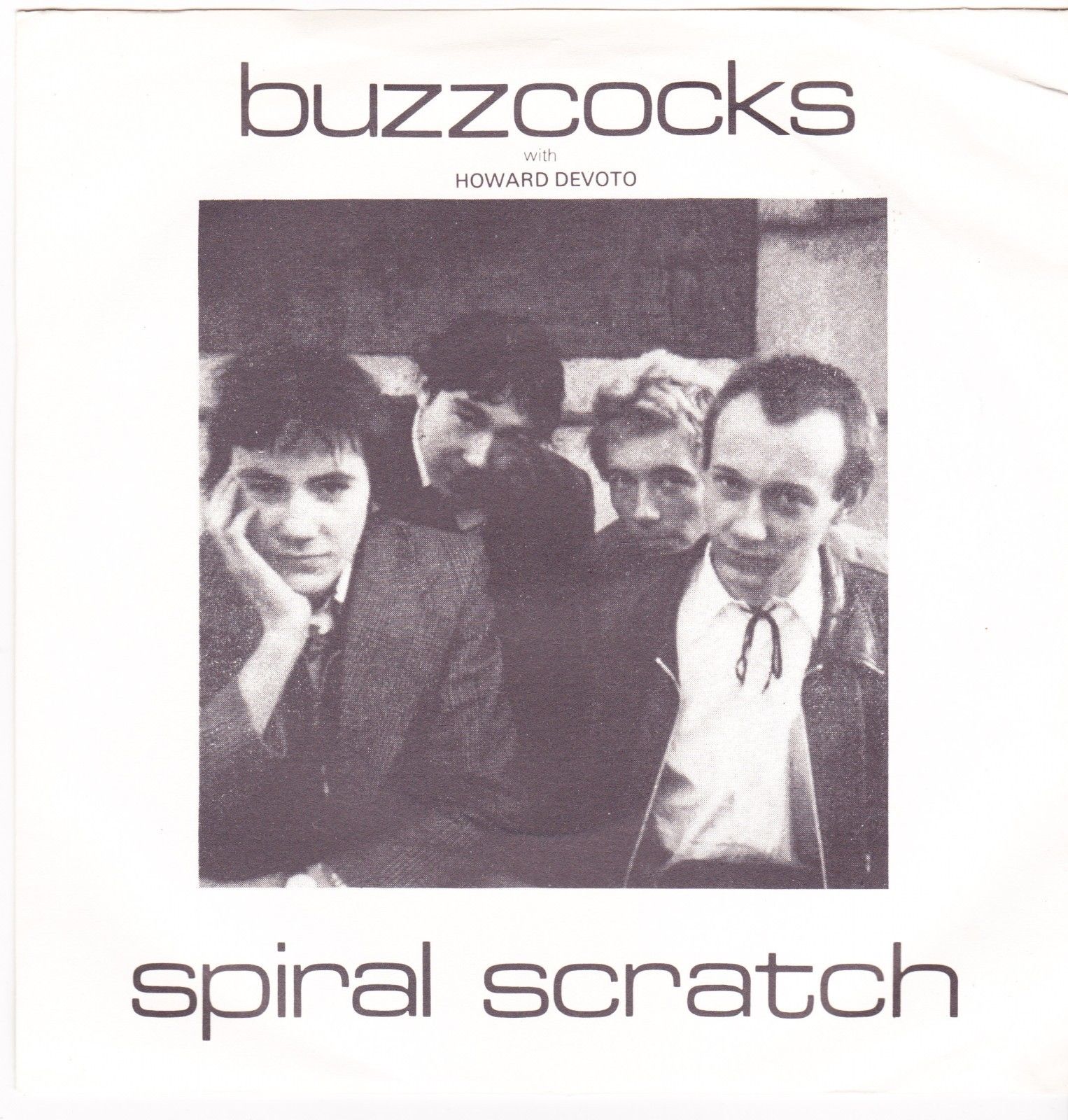
He was hardly the first punk rocker to leave us, but he played guitar on the first (and arguably the best) indie punk 7″, Spiral Scratch by The Buzzcocks. I thought he was a wonderful songwriter: there was a time when I thought he was the best songwriter. Another Music in a Different Kitchen was constantly on my turntable when I was 19, and I thought of Pete Shelley as a friend, though he had no idea who I was… but in a way he did. I knew because of his songs that he was on some deep level like me.

When I found out he was queer a couple of years later, I better understood the connection. But that connection was about more than our both being a particular kind of different. He was a romantic and a depressive. He was smart. He made the kind of records I wanted to make.

And today, I was working on a blog post about how we treat celebrities when they die, and at just the moment when I was ready to publish it, I checked Facebook, because that’s what I do. The first thing I saw was that he’d died. Considering the subject of what I’d just been working on, it felt like something I had to write about: both because it seemed relevant and because of how much his music meant to me in a dark period of my life.

There was a time when the only music I wanted to listen to was Spiral Scratch. For days, I played no other music. This was back in the mid-80s, when I lived in a tiny studio apartment in Tucson. I’d listen to it before work. I’d put it on as soon as I got home. When the needle made it to the center on side 2, I would flip it over and play “Boredom” again. I counted 56 times through the whole record. I’ve never done that with any other record. It’s a good thing I lived by myself, then, but then maybe the fact that I was alone was part of the reason why I needed that record so much.

I can’t say that right now, this minute, I miss Pete Shelley. I haven’t listened to the Buzzcocks in a good long time, and I can’t pretend that we have any other connection besides the records. But I am pulling out my copies of Spiral Scratch, Another Music, Singles Going Steady, Love Bites, and A Different Kind of Tension as soon as I get home.

Thanks for the music, Pete. Thanks for the hours when your music sustained me. Thanks for understanding.

BuzzcocksSpiralScratch