
This album came out a couple of months before Emerson, Lake, and Palmer’s Tarkus, the new band’s second album. The breakup was already established, ELP was a going concern, and a final album by The Nice was, it seems, of interest, at least in the British market, where the album charted at number 5. There’s a previous post that talks about side one of this album. You might want to reference that for the “bigger picture.”
The second side of the record consists of Tchaikovsky’s “Third Movement, Pathetíque Sympnony,” which is credited both to the Russian composer and The Nice, and Bernstein and Sondheim’s “America” which is subtitled “2nd Amendment,” in The Nice’s version. Emerson claimed that this was the world’s first instrumental protest song, which I find to be a dubious claim, although I do support the claim that this is a protest song, and does make its point well.
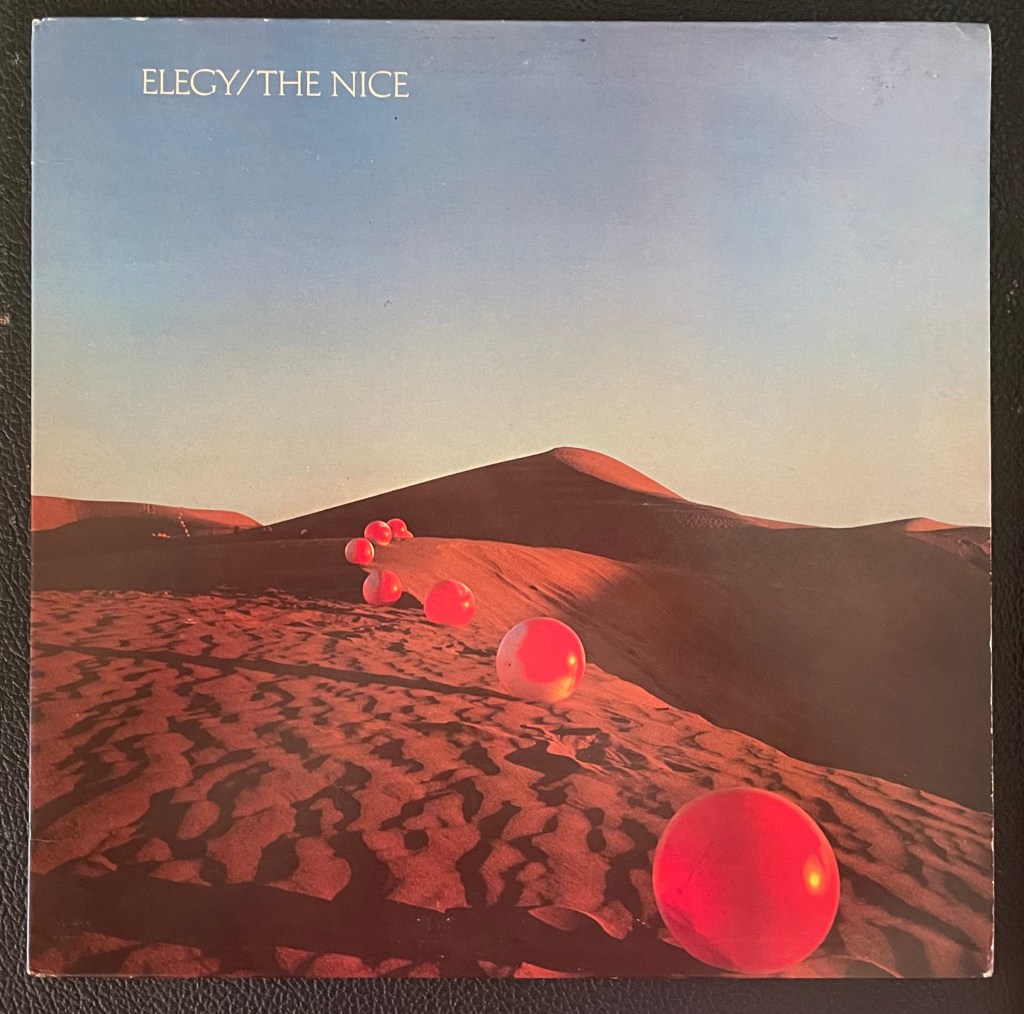
I said before that side 2 followed the same pattern as side 1, beginning on piano and moving to organ later, but here I am listening again and glory be! the first thing you hear is organ! How did I not remember that? In fact, there’s no piano on this side of the record at all. I apologize for the misinformation. I hadn’t listened to side 2 but the once in preperation for part 3 of this article. Repeat listenings have had me wondering if I should go back and edit that part, but in this case, it’s published and it would feel dishonest to change what you might already have read.
While there are jazz touches, and classical themes are explored in these arrangements, this is first and foremost a rock album. Though all of these songs have appeared on other albums, the band are working from new arrangements. One can look at this release as some sort of afterthought, but I love the warmth of these performances. I feel like this album may be the best justification for the band’s existence, released after the fact, when all of the members had moved on.
I love the instrumental freakout at the end of “America.” It’s very much in the wheelhouse of other early-70s drone at times, but ultimately represents the theme of entropy and destruction that appears to be the point here, and seems to be drafted into being the band’s big goodbye as well. Lee Jackson gets a final word in, playing the bass line a couple of times, as if to say that he’d be willing to continue the project, if only…
Honestly, I feel what Jackson is doing here. There are many points in my life where that whimper of an ending could have been magnificent if it was the beginning of rebirth. But here we are, at the end of something beautiful, falling apart for the lack of will to find the common ground to continue.
Side one of ELP’s Pictures at an Exhibition is next.
Please consider liking and commenting on this post. Subscribe if you can – it costs you nothing and helps this site thrive – and share this post with those you know who might appreciate it.

 Broadcast From the Brain Radio