
In 293, The Emperor Diocletian created the Tetrarchy. He split the Roman Empire in two, west and east, in 286 CE. He found that he needed a second-in-command to help administer each half of the empire. In the west, he appointed Maximian as Augustus with Constantius as Caesar under him. In the east, he appointed himself Augustus and Galerius as Caesar. The Roman Empire had been in danger of falling apart and in this way, Diocletian saved it for a time. The Tetrarchy collapsed after he abdicated, due to rival claims to power from Maxentius, the son of Maximian and Constantine, the son of Constantius. There was a civil war and at the end of it in 324 Constantine was the Roman Emperor and Christianity had become the state religion.
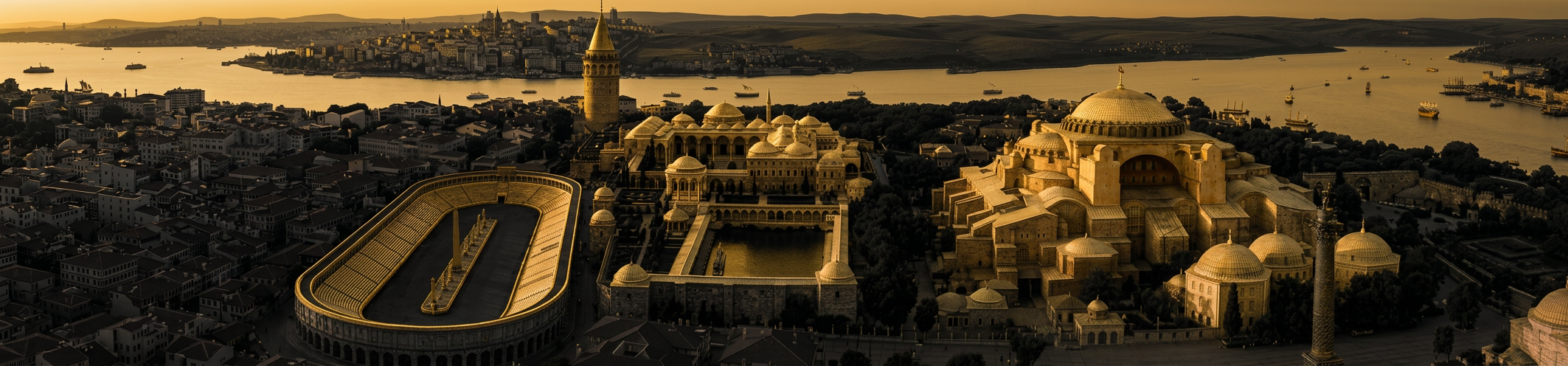
He founded the city of Constantinople in 330 and made it the capital of the empire, which it continued to be for 1123 years, barring the 57 years the Latins held the city in the 13th century. The division of the empire continued, however, and the last western emperor, Romulus Agustulus, was deposed in 476. The German who deposed him proclaimed himself the King of Italy, ending the western empire.
The Eastern Roman Empire survived for many complex reasons. To vastly oversimplify, many of the emperors were good statesmen. A higher percentage of Romans were literate than in any other kingdom in Europe. They benefitted from advanced technology, such as Greek Fire and compound bows. Constantinople itself was situated in such a way and defended so well that it survived many sieges.
In the 7th century a new and charismatic religion appeared in the world, known as Islam. The Romans lost much of their territory – all of their holdings in northern Africa and much of their territory in Asia – to the Caliphate, at that time rulers of the Muslim world. The empire struggled, lost some of their power and prestige, but survived and came to thrive again.
In 1025, one of the empire’s greatest Emperors, Basil II, died without an heir. Afterwards, the Empire entered a period of decline, with a revolving door of 14 Emperors succeeding each other over a period of 50 years. During this time the Imperial coffers were drained, the Army was destroyed beyond recovery at the Battle of Manzikert, and internal strife took a major toll on the empire’s wellbeing. In 1081, the young general Alexios came to power. His army was the first to sack Constantinople. Still, he ruled for 38 years and is considered the last truly great emperor among the Romans. Every ruler of the empire to come after him was his relative or direct descendant.
But the power of the empire had been broken beyond recovery. The empire continued to decline, though it took another 350 years to die. In 1453, Mehmet II laid siege to Constantinople and after two months of fighting, entered the city and sacked it for the 4th and final time. The last Roman Emperor, Constantine XI, disappeared in the fighting at the Theodosian Wall and was never heard from again. The Eastern Roman Empire became a memory, receding into history.


