I Voted for Ed Clark in my first Presidential Election

I was a bit naive, but I was aware that American politics was a scam.

This was 1980. Jimmy Carter (Democrat) v. Ronald Reagan (Republican) v. John B. Anderson (Independent) v. Ed Clark (Libertarian)

I lifted this pic from his wikipedia page. Oh — btw? Support Wikipedia.

That moment in time feels crucially foundational to this moment. I won’t say that I chose correctly. I don’t believe I did, to be honest with you, but given the situation the country was in and the choices available, I’m not terribly mad at myself for this vote. That said, based on my understanding of myself and of the world of that time with my 20/40 hindsight, I might have done better to vote for John B. Anderson.

Jimmy Carter, much as he is now admired by modern Liberals, was an ineffective and arrogant failPOTUS. For those who don’t know the history, he faced a difficult geopolitical era. The US-installed Shah of Iran was deposed and that country was taken over by fundamentalist Muslims under the leadership of the Ayatollah Khomeni. As Iran had been the US’s main supplier of petroleum to that point, the US suddenly found itself in yet another round of long lines at the gas pumps and rising prices for things like heating oil and jet fuel and all of the down-market items that depend on oil for either production or transport, which is pretty much everything. At the same time that prices were rising, so was unemployment — a situation known as stagflation.

Complicating this was that Iran then kidnapped and held hostage 52 Americans employed at the US Embassy to Iran. They were held in Tehran for 444 days, and only released (suspiciously) within hours of Ronald Reagan’s swearing-in on 1/20/81. Carter had launched a rescue attempt in April 1980, which failed and led to the deaths of 8 American servicemen.

Let’s just say that it’s no surprise that Carter lost in 1980 in a landslide, even without understanding his own arrogance and high-handedness within the confines of the leadership of his own party. He even got on television and gave a speech in which he chastized the American people for a “lack of confidence.”

I certainly had no loyalty to him as a Democratic presidential candidate. In my opinion, he typefies the breed: Ineffectual and smug. I continue to view the leadership of the Democratic Party in this way to this day. Carter got 44% of the vote, winning 6 states in the Electoral College.

Ronald Reagan was not a good option, either. Darling of the Christian right, least articulate and intellectually rigorous of all four candidates on my ballot that year, and championing some of the craziest economic policy of the era, which his own vice presidential candidate, GHW Bush, had characterized as “voodoo economics” right up until the moment that Reagan chose him as his running mate. Me voting for that fascist was never gonna happen. Still, he got 47% of the vote and 44 states in the Electoral College.

Ed Clark angered his party once by describing Libertarianism as “low-tax Liberalism.” He’d run in the previous California gubernatorial race in favor of the anti property-tax referendum Proposition 13 and against Proposition 6, which sought to bar gay men and lesbians from working in public schools. It was his pro-gay stance and record of fighting for us that won me over. My burgeoning understanding of myself as a queer person made him an attractive candidate in a field of terrifying prospects. I’ve only recently been reminded that his running mate in that election was David Koch of Koch Industries. eep. He got just over 1% of the vote.

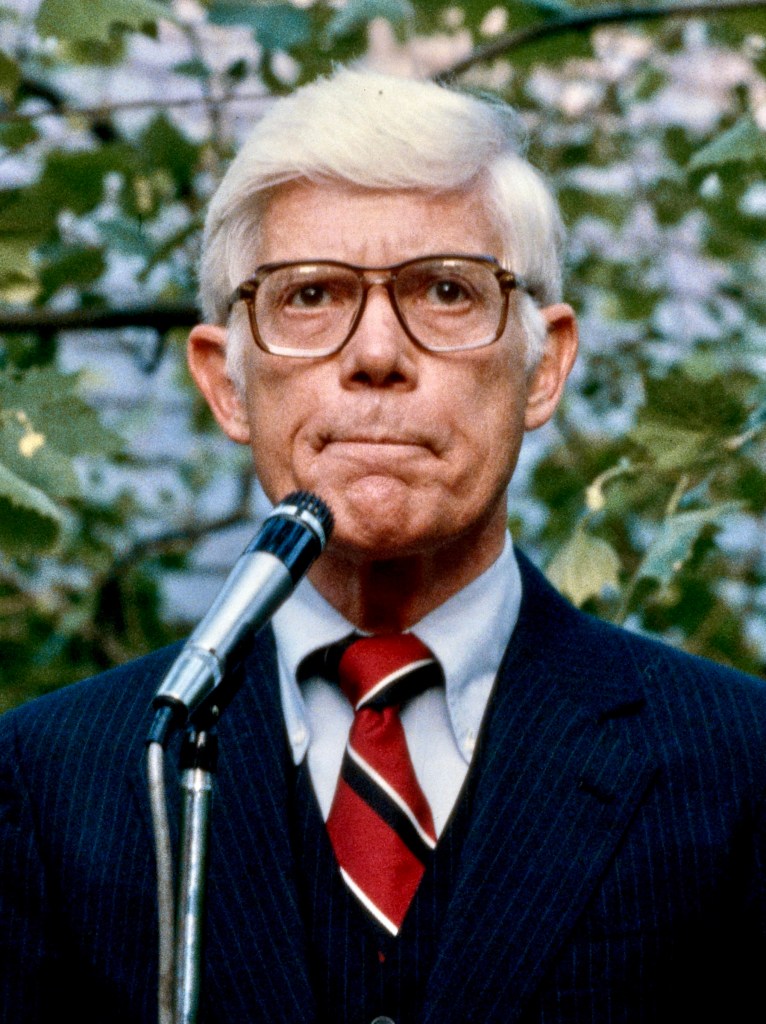
John B. Anderson, the candidate today-me would have absolutely supported in that election was also pro-civil rights, including gay rights, ran in the Republican primary that year warning that Reagan’s economic policies would be a disaster for the country (he was right) proposed a 50% hike in gasoline taxes, using that to offset a 50% reduction in Social Security payroll contributions, which I recall liking, and which I now think is a little bit questionable as policy, based on how it would have tied the Social Security fund to unrelated outside factors. He was also against the draft registration that Carter had initiated in 1978, and which Reagan supporters were very excited about. Anderson wound up with 6.6% of the vote, not winning even a single precinct across the country.

I can’t claim to be an authority on this, but it seems to me that Anderson was the last gasp of Liberal Republicanism in this country’s politics. I would not ever describe myself as any such thing as a Liberal or a Republican, much less some hybrid combination of the two, but from this standpoint almost five decades later (damn, I’m old!) He looks to me like the best path forward the country could have chosen at the time. He wasn’t perfect on policy, but at least he was generally pointed in the right direction.

Jackie O and Paul Newman supported this guy for POTUS in 1980. I also swiped this photo off of Wikipedia.

Please consider liking and commenting on this post. Subscribe if you can – it costs you nothing (you no longer have to have a wordpress account to like or comment) and clicking on the buttons helps this site thrive! Also, do be a dear and share this post with those you know who might appreciate it!

Ameleks

Sometimes the world won’t leave me alone.

The other night, I woke up from a dream about Netanyahu callling the Palestinians Ameleks, and how that was a justifucation for destroying them. I did something I almost never do, and came into my office, got on my computer and searched the term “Amelek.” Here’s what I learned:

The Torah and the Old Testament say that when the people of Israel were walking through the desert to return to their own land after being delivered from slavery in Egypt, they were attacked by the Ameleks. This act made the Ameleks the enemies of God, in the eyes of the Hebrews. But then, they thought that God himself had created the Ameleks to cause the Hebrews misery. It’s all very confusing and contradictory, but that’s how they thought.

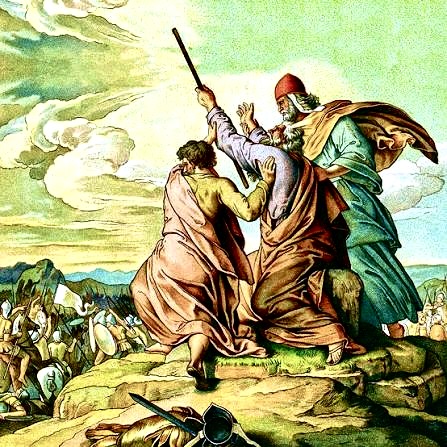
In the Bible/Torah, it says if Moses kept his staff held high while the battle continued, the Israelites would win. If he let it drop, the Ameleks would win. Aaron and Tur helped Moses keep his staff high. This is not in any way superstition or homoerotic symbolism. Get your minds out of the gutter, heathens.

The Ameleks were a nomadic people who mostly lived in and around Canaan, which is in the southern part of modern-day Israel. They had moved into the area because of the void left by the Hebrew tribes being enslaved in Egypt.

“Amelek” is what Netanyahu and other Israeli leaders have called the Palestinians. The Israelis think the Palestinians are the enemies of God. It doesn’t matter, though, because the Palestinians can’t be the Ameleks, because, over the course of generations, thousands of years ago, the Hebrews wiped out all the Ameleks.

Somehow we need to turn away from the path we’re trundling down as a species. We’re fixin to kill the world and ourselves with it if we don’t straighten up. The ideals and morals of the ruling class of this time are bereft of value and actively destructive. We have to change course.

And patterning behavior after tribal disputes from thousands of years ago doesn’t seem like a very good way to conduct ourselves. Especially when those tribal disputes ended with the death of an entire people.

Please consider liking and commenting on this post. Subscribe if you can – it costs you nothing and helps this site thrive! Also, do be a dear and share this post with those you know who might appreciate it!
A 500-Word History of a Lost Civilization That Stood for Over a Thousand Years

No one can accurately depict this much history in so small a space, but hey! I tried.

In 293, The Emperor Diocletian created the Tetrarchy. He split the Roman Empire in two, west and east, in 286 CE. He found that he needed a second-in-command to help administer each half of the empire. In the west, he appointed Maximian as Augustus with Constantius as Caesar under him. In the east, he appointed himself Augustus and Galerius as Caesar. The Roman Empire had been in danger of falling apart and in this way, Diocletian saved it for a time. The Tetrarchy collapsed after he abdicated, due to rival claims to power from Maxentius, the son of Maximian and Constantine, the son of Constantius. There was a civil war and at the end of it in 324 Constantine was the Roman Emperor and Christianity had become the state religion.

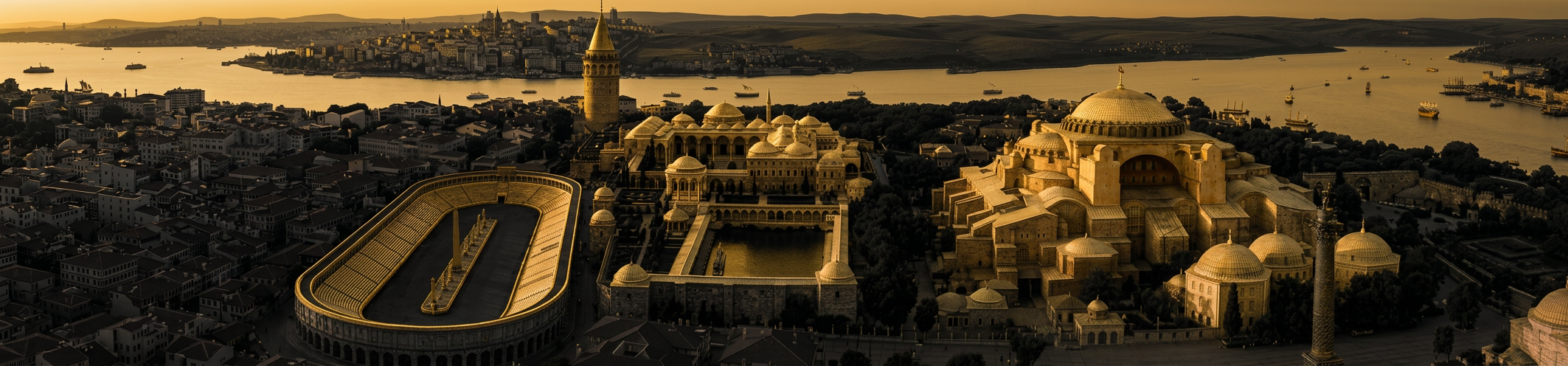
AI slop. This configuration is not correct. The palace was across that square from the Hagia Sophia, and the hippodrome was next to the palace. The Galata tower was across the estuary known as The Golden Horn, in… ummm… Galata. Tip of the hat to John Mendelssohn who devised this color scheme.

He founded the city of Constantinople in 330 and made it the capital of the empire, which it continued to be for 1123 years, barring the 57 years the Latins held the city in the 13th century. The division of the empire continued, however, and the last western emperor, Romulus Agustulus, was deposed in 476. The German who deposed him proclaimed himself the King of Italy, ending the western empire.

The Eastern Roman Empire survived for many complex reasons. To vastly oversimplify, many of the emperors were good statesmen. A higher percentage of Romans were literate than in any other kingdom in Europe. They benefitted from advanced technology, such as Greek Fire and compound bows. Constantinople itself was situated in such a way and defended so well that it survived many sieges.

In the 7th century a new and charismatic religion appeared in the world, known as Islam. The Romans lost much of their territory – all of their holdings in northern Africa and much of their territory in Asia – to the Caliphate, at that time rulers of the Muslim world. The empire struggled, lost some of their power and prestige, but survived and came to thrive again.

In 1025, one of the empire’s greatest Emperors, Basil II, died without an heir. Afterwards, the Empire entered a period of decline, with a revolving door of 14 Emperors succeeding each other over a period of 50 years. During this time the Imperial coffers were drained, the Army was destroyed beyond recovery at the Battle of Manzikert, and internal strife took a major toll on the empire’s wellbeing. In 1081, the young general Alexios came to power. His army was the first to sack Constantinople. Still, he ruled for 38 years and is considered the last truly great emperor among the Romans. Every ruler of the empire to come after him was his relative or direct descendant.

But the power of the empire had been broken beyond recovery. The empire continued to decline, though it took another 350 years to die. In 1453, Mehmet II laid siege to Constantinople and after two months of fighting, entered the city and sacked it for the 4th and final time. The last Roman Emperor, Constantine XI, disappeared in the fighting at the Theodosian Wall and was never heard from again. The Eastern Roman Empire became a memory, receding into history.