Genesis – Trespass

1970: the year Genesis figured out who they were, and then were forced to evolve again.

The lineup for this album is Peter Gabriel, Tony Banks, Mike Rutherford, Anthony Phillips, and John Mayhew. This is Mayhew’s only album with the band, and Anthony Phillips’ last. It’s the band’s second. I have to say, it casts a spell.

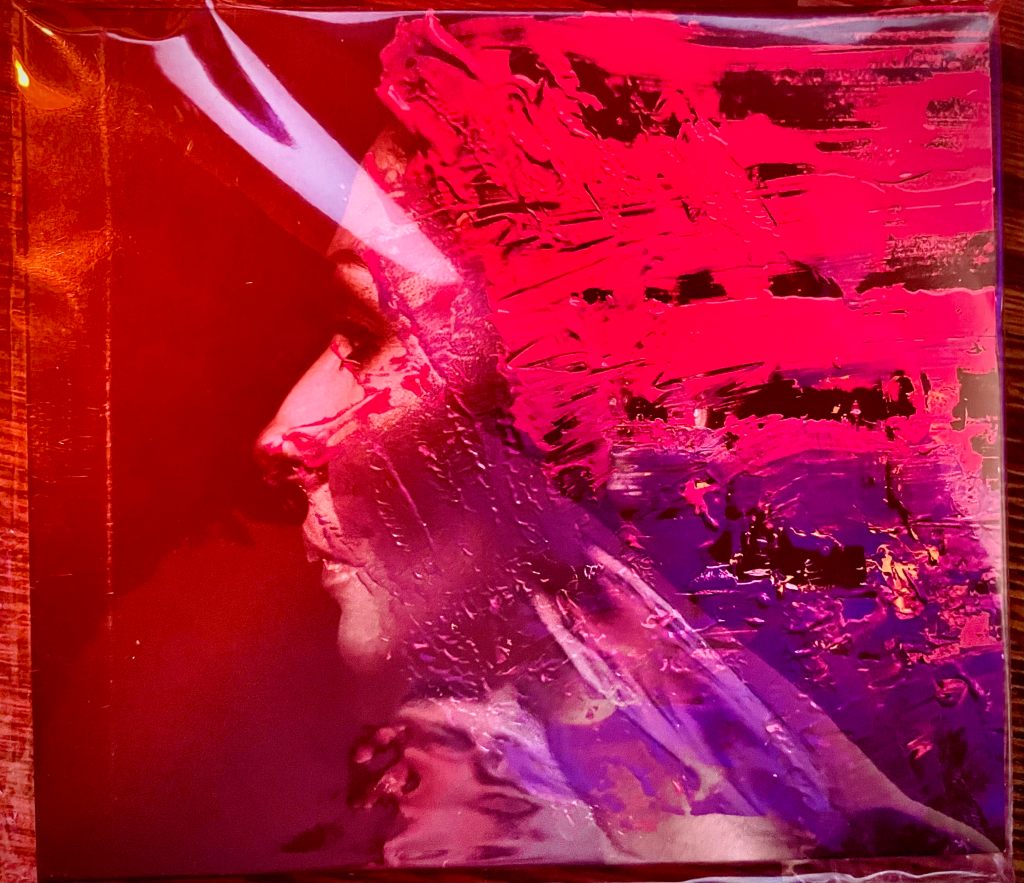
My reissue copy of the gatefold sleeve. The cover’s janky but the vinyl is unblemished.

Trespass is the album that would establish Genesis as one of the world’s very best prog bands — it’s the template for much that came later. By the same token, it follows the template set by In The Court of the Crimson King, Time and a Word, and The Least We Can Do is Wave to Each Other while remaining distinctly a Genisis album.

Anthony Phillips is a more Steve Howe-like guitarist that Steve Hackett is. He’s a classical guitarist, which, granted, Hackett also is, on occasion, but of the two, I think Phillips has a slightly more delicate touch. I admire Phillips’s early solo work very much. this album is packed with some very out-front melodic ideas from Phillips, and Tony Banks has a lighter touch. The general aspect of the band is spritelier.

Peter Gabriel is front and center, as stong and evocative a singer and master of ceremonies as anyone could ask for, a great rock performance centerpiece fully realized, with that trademark sweet, honey-and-cigarettes baritone and finely tuned theatrical sense… And he was so young! He was quite fey on those early records, was he not?

The band also feels more balanced than it did later. At least it’s a *different* balance. Later albums would shift the sonics of the band more towards Banks being dominant, and new guitarist Steve Hackett was often treated like a “junior” member of the band. I wonder what a second or a third album by this lineup would have sounded like if Phillips hadn’t become ill and if Mayhew had found his way into the social circle of the band?

I own this one on CD and vinyl. I seem to be moving towards owning multiple copies of certain records. I also seem to be lacking storage space. I will need to address this issue at some near-future point. Something’s gonna have to give.

I like likes, love subscriptions, and crave comments.

Neon Heat Disease is my jam

What would an all-yankee King Crimson sound like, you ask? Here’s the answer.

Belew/Levin/Vai/Carey

Not to limit myself to a single answer to this question, but Beat is my favorite currently-active band. I hope (they’ve hinted) that they’re working on an album of original music. The primary work here, covering the music of King Crimson’s 80s ouvre, lends itself to a lot of things that I resonate with in terms of a creative approach to rock music.

They have the deepest pocket of any rock band I can think of, and I love their mathy-ness. They’re algo-rhythmic®! I hear the Beatles in this music. King Crimson’s next phase would be more overt about the connection, but the basic sonics of this band harken back in the melodicism, the collaborative writing process between Fripp and Belew, and the exacting approach to arrangements.

On the other hand, I can note the similarity of “Neon Heat Disease” to “Neon Meate Dream of a Octafish” by Captain Beefheart and his Magic Band off of Trout Mask Replica. So.. is 80s Crimson a perfect amalgam of Revolver and Trout Mask with a forward-looking technical bent? I think the case could be made by plunking the needle down on this album.

Tony Levin is the second vocalist on this, and he’s also taken over keyboards from Fripp. He also provided many of the photographs of the band that grace the inside of this triple gatefold and booklet. His presence in this re-imagining of the original music is vital to its success.

Steve Vai’s replacement of Fripp works because there’s a line he treads between copying and originating. He has to honor that huge presence that would otherwise be missing without disappearing as a separate entity. One early indication of how he approached this is his solo in Heartbeat. It sounds like electric erhu. That’s a really cool way to interpret Fripp’s playing and take it somewhere else entirely at the same time, by adding an unexpected third element. There’s nascent world-music ambitions in the 80s Crimson music sourced here, and adding sonics that suggest new contexts is absolutely in keeping.

What Danny Carey adds most significantly here is that he plays all of these songs on a set of acoustic drums. I think the music from the later source albums is greatly improved by this one change. I don’t recall seeing any electronic drums in Carey’s setup from the show (you can correct me if you know different) and the essential liveness of the sounds he provides raises all of the music from the second and third albums up to the sonic level of the first album. I get that Bruford wanted to push the envelope on the sound palate he was using, but this live recording makes an excellent case for the irreplaceability of percussion sounds coming from skin and bone, not curated electrons.

This is one of my most important objects from my move back to analog music. I love vinyl in all its machine-age glory. Carey’s drumming here is evidence for my case. Music must be made by flesh and bone and all of the worldly materials. I fully believe that, and here’s some strong evidence.

Thanks for reading! If you enjoyed this, please leave a comment and a like, and as always, subscriptions are welcome and encouraged!

10/28/24

I’m listening to Hand. Cannot. Erase. by Steven Wilson and it’s a remarkable experience.

My copy of Hand. Cannot. Erase. by Steven Wilson

It came out in 2015. Wikipedia tells me it’s his fourth solo album, since deactivating Porcupine Tree after the less-than-successful The Incident (an album I liked, though they’ve made better.)

This album is proggy af. Synths, time signature shenanigans, lots of notes, two 10+ minutes-long tracks… and yet it feels contemporary. If Classic Rock™ were still a thing as of 10 years ago, this album would definitely qualify. I hear the influences, and the originality. This is a Contender, an album that should be in the pantheon.

I’m listening now and it soothes me. The election THE GODDAMN ELECTION is 8 days away and I have little hope that things are going to be OK. There is a charismatic cult leader openly running for president, describing the fascist policies he intends to implement publicly, and the supposed “normie” (but also authoritarian and a genocide) alternative is barely hanging on to a lead in the current polling. The only person in the race whom I think might have a chance of setting this country on the right path has absolutely no chance of winning. It’s a scary time.

But this album is good, thoughtful, and human. The playing here reminds me that there is virtue in people, and that that virtue… great musicianship, great music production, a clear eye expressed in the lyrics of these songs, originality… can still happen.

Steven Wilson gives me hope.

Object 9: Yes — Magnification CD

Jon Anderson’s last album with the band

As noted in my previous post, these days when I go to record stores, I’m combing the racks for prog cds. This is often frustrating, as most of the music I’m interested in is a bit too esoteric for the typical used record store buyer to take a chance on, or there were few enough of a particular album pressed that they just don’t show up much.

Therefore, I bought my copy of Yes’s Magnification online, which is fine, as I think it unlikely that I would find a used copy.

Writing about music is challenging for me, as there are only so many hours in the day for music in my life, maybe only one or possibly two hours in a typical weekday. I have minor audio processing issues, so it’s hard for me to sort out two different audio sources at the same time, especially when it comes to music. It never fades into the background for me, which makes it difficult to focus on anything else, especially if the music has a lot of movement, or strong emotions, or lyrics that need to be focused on. If I’m listening to music, I can’t also be writing. I have to pick one or the other.  It’s just the way my quirky brain works.

As a result, I don’t have the encyclopedic knowledge your average music writer is expected to have, and it’s hard to speak with authority about a band’s work if you don’t know all of it, if you don’t know biographies of the various musicians involved, or their connections to other bands, etc. This is especially true of a band like Yes, who have been active for well over 50 years, who seem to rotate members in and out every album or two, and when they have, at this point, 23 studio albums, multitudinous solo albums by various members past and present, and other bands that various members have played in either before, during, or after their time in Yes…

I’ll pause here to note that lineup changes are such a constant that there are no original members still recording and touring with Yes at this point. The closest is Steve Howe, who has been with the band on and off since their third album, and having been out of the band for pretty much all of the 1980s. Sendond longest-standing member of Yes currently is Geoff Downes, whose first album with the band was Drama (1980). It’s probably worth discussing whether or not the current band calling itself “Yes” is really Yes, Since nobody there now was there when the band was named. Maybe I will sometime.

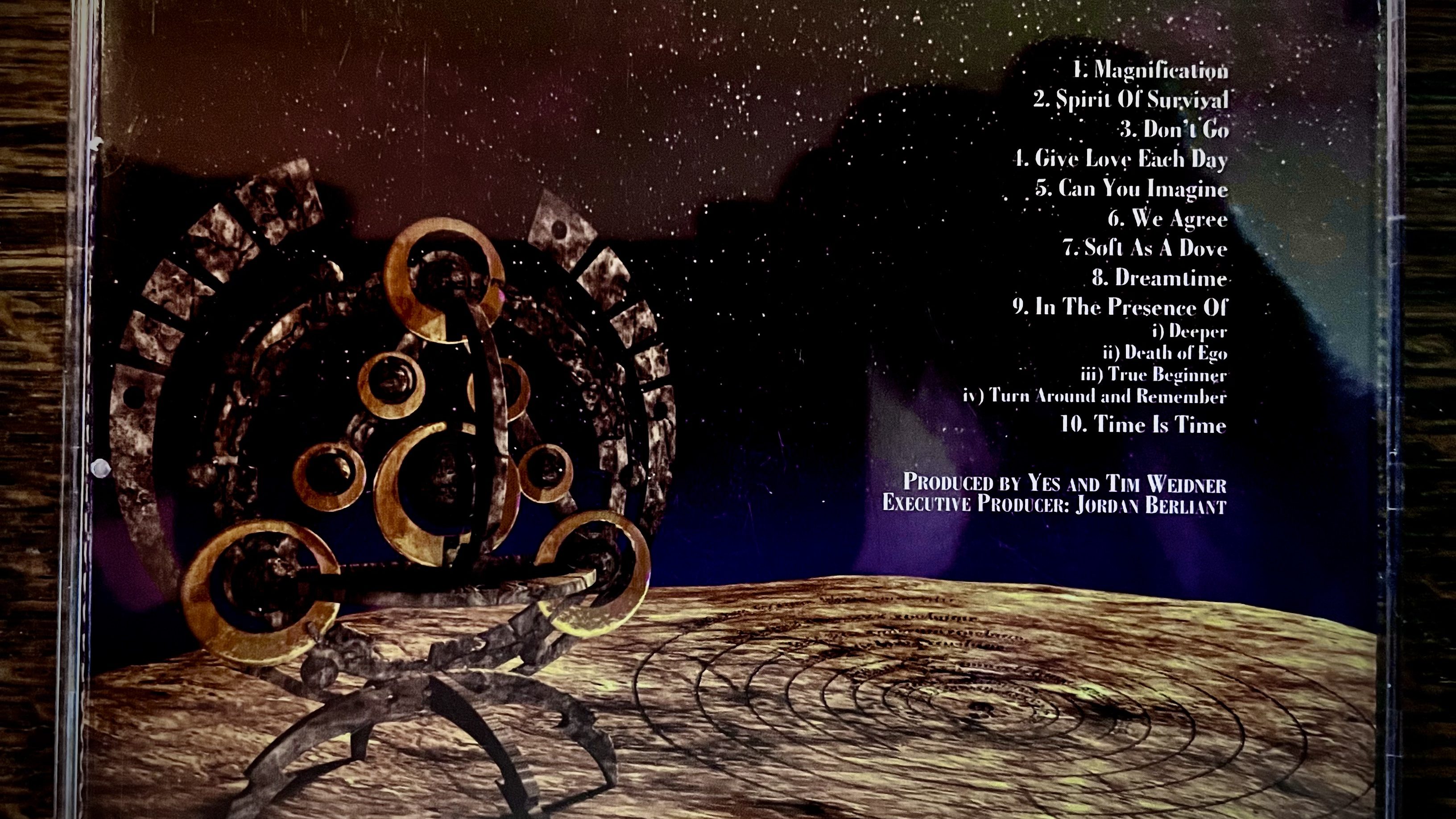
Magnification is their nineteenth album, the last one to feature the majority of Yes’s creative main lights. Singer Jon Anderson, guitarist Steve Howe, and bassist Chris Squire are all on this CD, as is Alan White, their longest-standing drummer, who came into the band when Bill Bruford moved on after their fifth album Close to the Edge. Magnification is the only Yes album to not have a keyboard player, and their second to utilize an orchestra, the other album to do so being Time and a Word, their second album. The orchestrations on Magnification are by Larry Groupe, and they both serve as a replacement for a keyboardist, and also stand on their own as orchestrations with their own identity.

The space that the orchestrations take in the recordings present a problem, making the sound a bit muddy – too many of the strings and winds occupy the same tonal space as instruments already in the band, the way that they recorded the orchestra gives each of the acoustic instruments too much presence. Guitar lines get lost in the mix, Squire’s normally bright, spritely bass lines are dulled because the instrumentation is so extra that they have to minimize the punch that is so much a trademark of the Yes sound. I believe that this is also a criticism laid on their previous orchestral record, though it was original guitarist Peter Banks and organist Tony Kaye that were pushed to the side then.

To my mind, Magnification harks back to Time and a Word, back to the fundamentals of the band, yet marks the years of the band’s growth. I like both Magnification and Time and a Word, the performances themselves are up to the Yes standard, and the songs on each are emotive, complex, yet more concise than the band’s most expansive work. Another treat here is that Chris Squire sings lead on “Can You Imagine,” which will remind the true Yes fan of Squire’s one solo album Fish Out of Water (my favorite of all of the myriad solo albums by Yes members) which, incidentally, is another rare example of orchestral Yes-related music.

There are still a few of the latter-day Yes albums that I haven’t gotten around to, and others that just aren’t that great in my opinion. Magnification’s songs are engaging, and for once, sixty minutes of new material created with the extra expanse of a CD in mind doesn’t cause me to pine for the more concise albums of the vinyl era.

I think Magnification, while not without its problems, ranks in the upper echelons of the band’s recorded output and therefore gets spun regularly during my valuable listening time.

Object 1: Jason Reynolds’ Look Both Ways

Here’s something I haven’t seen many of: middle-grade short story collections.

JReyLBW

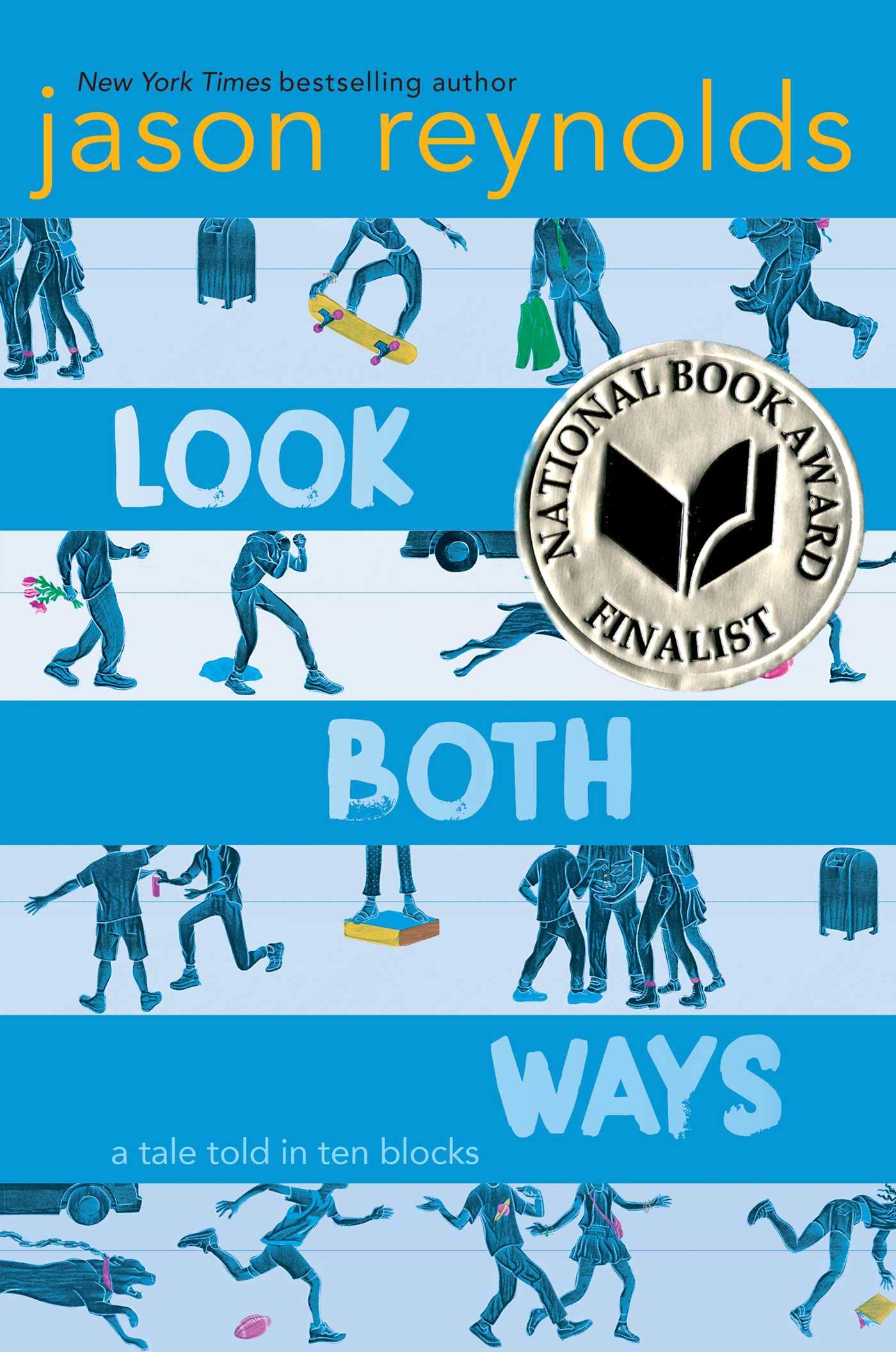
My copy is the first edition hardback. I think I bought it from Amazon to be delivered the day of its release, so it doesn’t have the book award thingamy on it. It has a beautiful cover, so I like that my copy is unblemished.

I finished reading it in about three sittings. There are ten stories, all set on the same afternoon just as school is letting out. Each story is about a different kid or set of kids and their walk home. I love Jason’s writing — he has a gorgeous prose voice — or for that matter, speaking voice — let’s just say that a Jason Reynolds reading is a fabulous experience. Plus, also, too, he’s written some of my very favorite children’s books. This one is a very good book. (My favorite of his books is As Brave As You, btw.)

I’m holding on to it — it’s a first edition. Jason teaches at my alma mater, otherwise I might never have read his work. But as it happens, I do know these books, and I am the richer for it.