The Musical Instruments I Want to Waste My Money On

Because even though I don’t really play music much any more, I still think of myself as a musician

I stopped playing music over a decade ago. Honestly, I stopped playing gigs another decade earier than that. The reasons for it were multitudinous, but came down to a few overarching concerns, some having to do with transitioning my gender (voice dysphoria) but others going to the simple fact that playing out was getting to be nothing but a grind, something I had little passion for… essentially, it was burnout. I went through a number of years when I didn’t even listen to music, preferring to just enjoy the ambient noise of life.

I’ve definitely returned to music appreciation now. I used to do all of my retail therapy at the record store. I’ve redeveloped that habit. A couple of years ago, I decided I wanted to have a working turntable again. I now have that, and I’ve just about tripled my vinyl collection since doing so. I’m considering a moratorium on buying new stuff, just so I can spend some time with the things I’ve picked up and decide on some favorites. I mean. I do have favorite things, and I’ve written about a few of them on this blog, but there are things I’ve filed away, having listened through them once or twice, that I want to make time to pull out again and listen on repeat, because that’s how you get things into your bloodstream and make them part of your internal soundtrack.

So I’ve been thinking about whether I should get back to playing music. I have no real interest in reconstructing my solo act. I was so tired of the lack of interaction with other players, of endlessly repeating the same songs in rehearsal and at gigs. One of the things I prefer about writing is that you compose, you perfect, then you move on. That’s not what playing music is like.

But it would be fun to have a group of humans to get together with on a regular basis and treat music as the social interaction it’s meant to be. I’m sure I would enjoy it, as long as it was somewhat low-key, done for fun, and kept away from the crazymaking that is also so much a part of being in a band. One thing I’d need to do to get back to playing is to update my equipment. Some of that is only worth doing once you know what sort of music you’ll be playing (some kind of rock music for me, but even that carries lots of variables) but I do find myself looking at various basses and guitars – mostly basses – that it would be nice to have and play.

My top three basses to get would be a Stingray, a Thunderbird, or (and?) a Mustang.
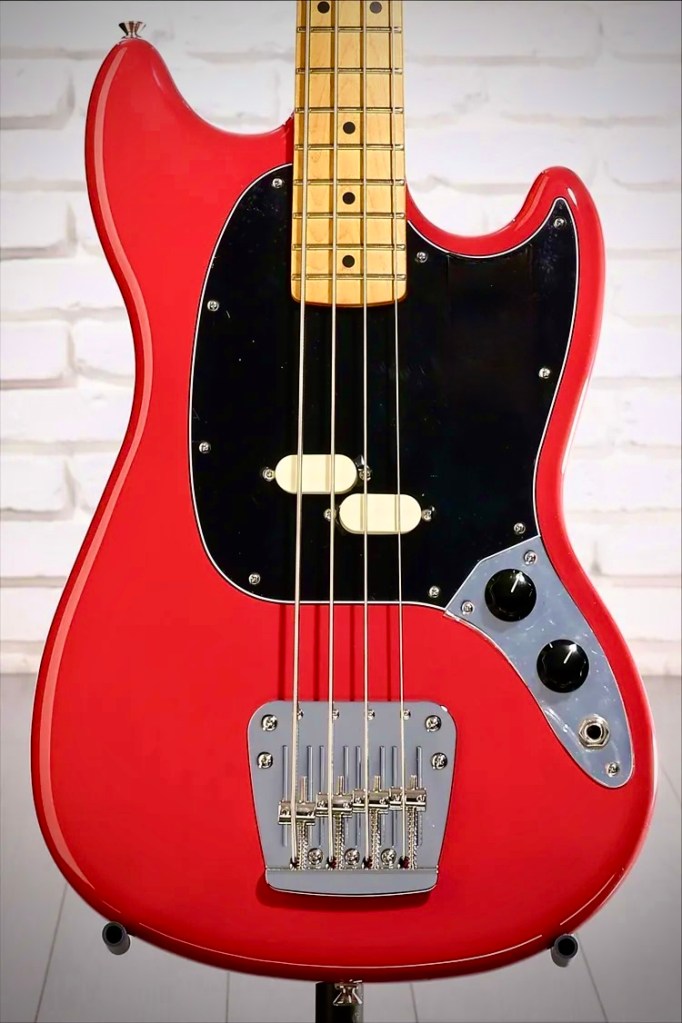
My top guitars to get would be a Les Paul, a Martin 00, and a Mustang.

All except the Martin would be red with a black pickguard, ideally.

But the fact is, I don’t have any reason to buy any guitar. I have guitars. I have worked hard to retrain my creative impulses towards writing, for reasons listed above as well as a few others I’m not going to bother listing here.

There’s nobody around who is interested in making music with me. I’m not really pursuing it. It’s OK. I’ll enjoy music as a consumer/spectator, and keep putting my energy into writing, which suits my life and my interests better.

Please consider liking and commenting on this post. Subscribe if you can – it costs you nothing (you no longer have to have a wordpress account to like or comment) and clicking on the buttons helps this site thrive! Also, do be a dear and share this post with those you know who might appreciate it!
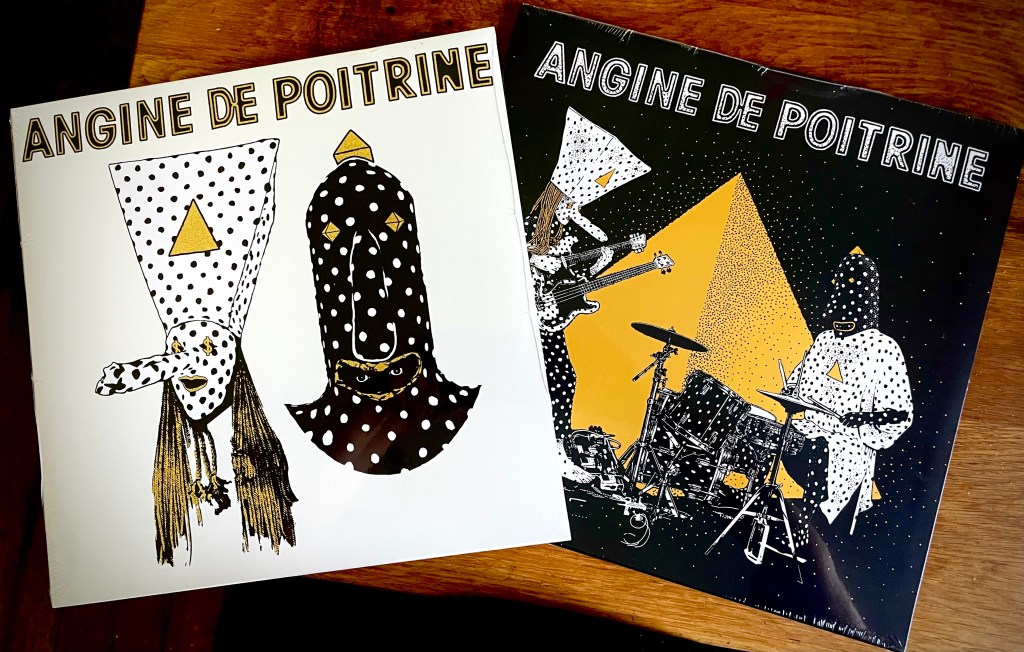
Vol. I & Vol. II

I finally acquired these two beauties…

Photo by me, art design by Fabien Peterson (Vol.I) and Arielle Corbeau (Vol. II)

Like many other fans of this band, I’ve been waiting for MONTHS to get my hot little hands on these two beauties. I’ve seen many pictures of these records on my social media feeds, and it makes me happy that we all have our little grails. But what of the actual objects? Were they worth the wait?

It’s worth noting that both albums have been available to us online. We have been able to turn on the interwaves and find all 12 of these tracks (6 per disc, 3 per side) any time we wanted, for the price of whatever we’re paying for our internet hookup anyway. Then we can stream them for “free,” meaning you might have to deal with ads or perhaps a subscription price. Youtube also has many audience recordings of their current ongoing tour, so any of these tracks that they’ve brought to the stage, you can most likely see a shaky hand-held cam video of with muddy-ass sound as an added bonus.

And yeah, I’ve done that a bunch. Short of turning this exercise into a defense of buying physical media in an age when all of this stuff is RIGHT THERE IN FRONT OF YOU ON THE CENTRAL SCRUTINIZER, I can only tell you that I’m happy to have these particular objects in my posession, in the context intended by the makers of this music. YMMV.

I can also tell you that I have seen these 2 albums listed on eBay for a grand.

Vol. I includes two songs titled after foods the band has been known to throw into the crowd at shows. In each case, I find them to be the weaker tunes on the album. Tohogd (hot dog) sounds like an early effort, something the brothers made when figuring out how to do this act. Sahardnieh (sardines) sounds a bit more fully realized, but sits between two tracks I find more interesting and more complete. Side one has what I think is the best song on the record — Sherpa — but overall, side two is the stronger set. By overreaching extension, I derive the impression that this band has far more to offer us than its baser, more novety-ish impulses.

But then, I feel a little presumptuous in trying to separate out intentions I’m not privy to. And I will remind that the first thing that made me perk up and listen was their stage presentation — the very gimmickiness that I set at the base of their approach. Still, between Ababa Hotel and Sahardnieh, I’m absolutely going to point you to the former as a fine demonstration of what this band can do, and Sahardnieh as a slightly lesser, but still vital representation of what the band identity.

Side 1 of Vol. II is the high point of their recorded work, in my opinion. It’s like a combination of Eno and “Pleasant Valley Sunday” with a bit of krautrock flavor mixed in. It’s also very precise and funky af. Again, and not for the last time… AdP are very good players. These songs are structured brilliantly, the humor is fully present. As I listen through these three songs — “Fabienk,” “Mata Zyklek” (My favorite Angine de Poitrine song,) and “Sarniezz” — I feel a thrill at brilliant new music that I haven’t felt in a good long while. Each new track makes me want to dance, makes me smile, makes me glad I’m here to experience this young band who have found new ways to bring out these responses in me.

And the music holds up without the costumes. That may be the best thing that comes from listening to the vinyl. Without the extra stimulus of those whacked-out (but very cleverly designed) outfits, the experience is just the players — Khn and Klek — and the aural environment they create. Khn uses the microtonality of his instrument(s) in an absolutely tasteful way. The “extra” notes are never just extra — they are an augmentation, an extension of the possibilities available.

One of the most impressive passages here, the end of the first section of “Utzp,” the side 2 opener, is a layering of harmonies, each new layer incorporating microtonality as each new part comes in and keeping things consonant and propulsive as Khn surprises us each time things come around again.

And side 2 of this album doesn’t disappoint, even though I think they rightly chose side 1 as the bulk of that KEXP live set that everybody saw (myself included) and turned them into the most exciting thing in rock music in 2026. The ideas keep flowing, the execution is in all cases flawless and fun.

Please consider liking and commenting on this post. Subscribe if you can – it costs you nothing and helps this site thrive – and share this post with those you know who might appreciate it.

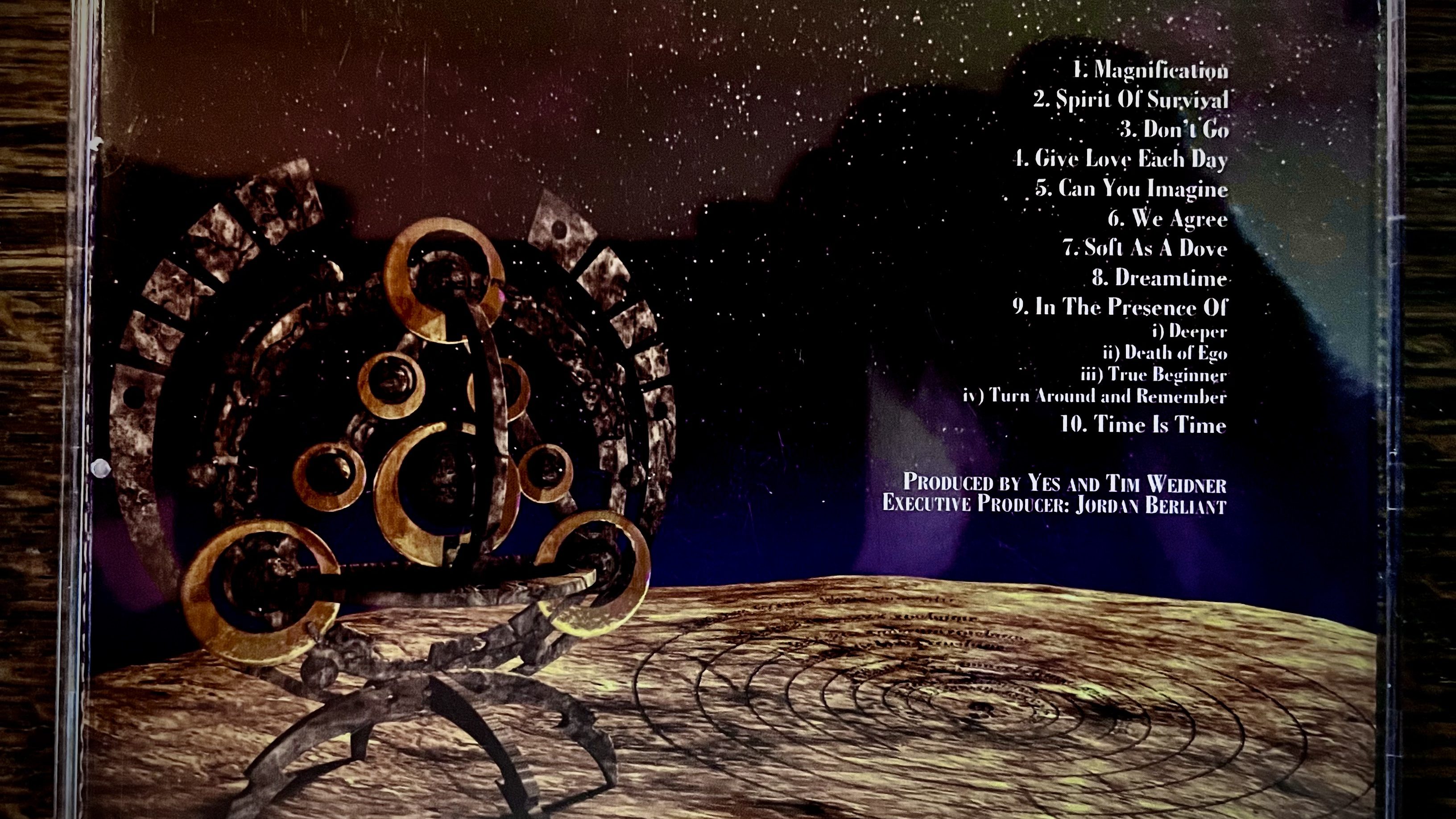
Object 9: Yes — Magnification CD

Jon Anderson’s last album with the band

As noted in my previous post, these days when I go to record stores, I’m combing the racks for prog cds. This is often frustrating, as most of the music I’m interested in is a bit too esoteric for the typical used record store buyer to take a chance on, or there were few enough of a particular album pressed that they just don’t show up much.

Therefore, I bought my copy of Yes’s Magnification online, which is fine, as I think it unlikely that I would find a used copy.

Writing about music is challenging for me, as there are only so many hours in the day for music in my life, maybe only one or possibly two hours in a typical weekday. I have minor audio processing issues, so it’s hard for me to sort out two different audio sources at the same time, especially when it comes to music. It never fades into the background for me, which makes it difficult to focus on anything else, especially if the music has a lot of movement, or strong emotions, or lyrics that need to be focused on. If I’m listening to music, I can’t also be writing. I have to pick one or the other.  It’s just the way my quirky brain works.

As a result, I don’t have the encyclopedic knowledge your average music writer is expected to have, and it’s hard to speak with authority about a band’s work if you don’t know all of it, if you don’t know biographies of the various musicians involved, or their connections to other bands, etc. This is especially true of a band like Yes, who have been active for well over 50 years, who seem to rotate members in and out every album or two, and when they have, at this point, 23 studio albums, multitudinous solo albums by various members past and present, and other bands that various members have played in either before, during, or after their time in Yes…

I’ll pause here to note that lineup changes are such a constant that there are no original members still recording and touring with Yes at this point. The closest is Steve Howe, who has been with the band on and off since their third album, and having been out of the band for pretty much all of the 1980s. Sendond longest-standing member of Yes currently is Geoff Downes, whose first album with the band was Drama (1980). It’s probably worth discussing whether or not the current band calling itself “Yes” is really Yes, Since nobody there now was there when the band was named. Maybe I will sometime.

Magnification is their nineteenth album, the last one to feature the majority of Yes’s creative main lights. Singer Jon Anderson, guitarist Steve Howe, and bassist Chris Squire are all on this CD, as is Alan White, their longest-standing drummer, who came into the band when Bill Bruford moved on after their fifth album Close to the Edge. Magnification is the only Yes album to not have a keyboard player, and their second to utilize an orchestra, the other album to do so being Time and a Word, their second album. The orchestrations on Magnification are by Larry Groupe, and they both serve as a replacement for a keyboardist, and also stand on their own as orchestrations with their own identity.

The space that the orchestrations take in the recordings present a problem, making the sound a bit muddy – too many of the strings and winds occupy the same tonal space as instruments already in the band, the way that they recorded the orchestra gives each of the acoustic instruments too much presence. Guitar lines get lost in the mix, Squire’s normally bright, spritely bass lines are dulled because the instrumentation is so extra that they have to minimize the punch that is so much a trademark of the Yes sound. I believe that this is also a criticism laid on their previous orchestral record, though it was original guitarist Peter Banks and organist Tony Kaye that were pushed to the side then.

To my mind, Magnification harks back to Time and a Word, back to the fundamentals of the band, yet marks the years of the band’s growth. I like both Magnification and Time and a Word, the performances themselves are up to the Yes standard, and the songs on each are emotive, complex, yet more concise than the band’s most expansive work. Another treat here is that Chris Squire sings lead on “Can You Imagine,” which will remind the true Yes fan of Squire’s one solo album Fish Out of Water (my favorite of all of the myriad solo albums by Yes members) which, incidentally, is another rare example of orchestral Yes-related music.

There are still a few of the latter-day Yes albums that I haven’t gotten around to, and others that just aren’t that great in my opinion. Magnification’s songs are engaging, and for once, sixty minutes of new material created with the extra expanse of a CD in mind doesn’t cause me to pine for the more concise albums of the vinyl era.

I think Magnification, while not without its problems, ranks in the upper echelons of the band’s recorded output and therefore gets spun regularly during my valuable listening time.