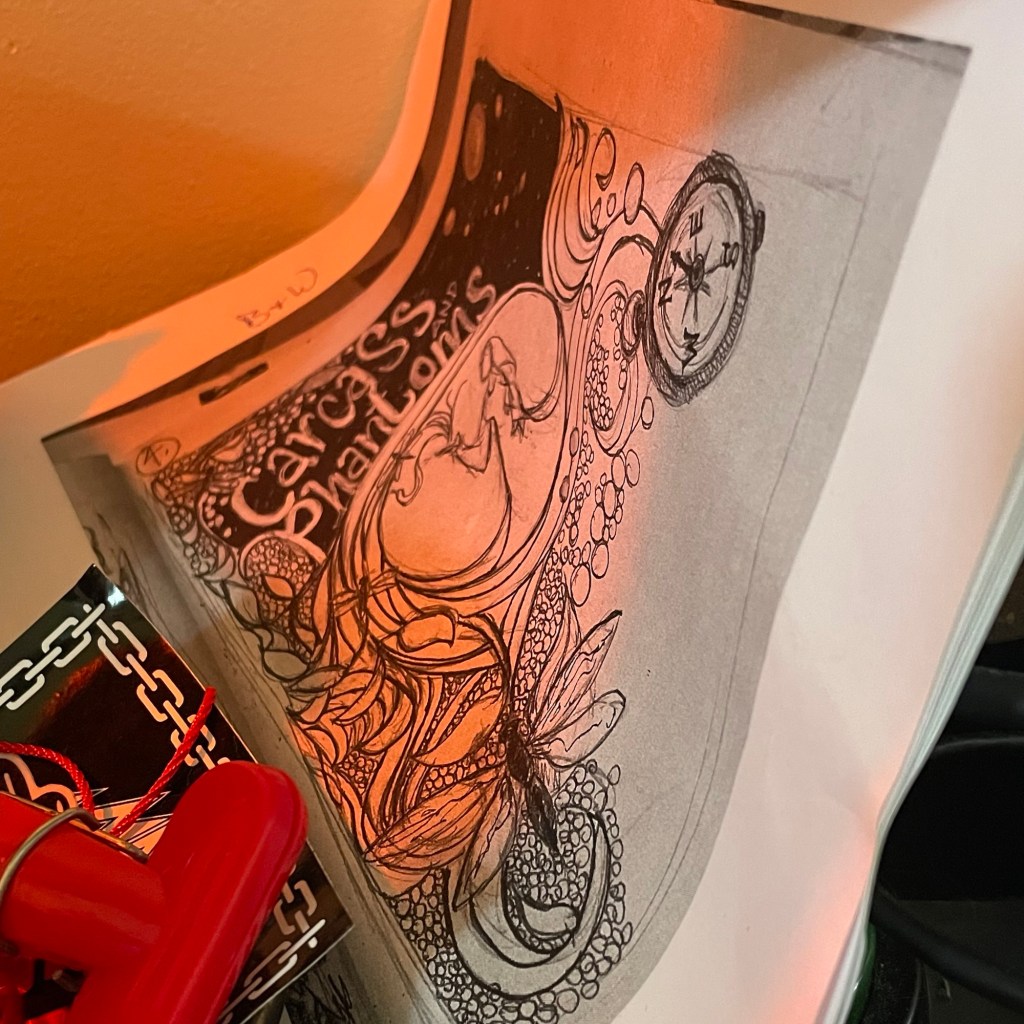
Interior layout’s done, I’ve seen a mockup of the beautiful cover Heather Balchunas is doing for me. I’m very excited to share this object with you! I am planning to have copies with me when I read at the North Quabban Garlic and Arts Festival later this month, and following that, you’ll be able to order it online from this site (the price will be ten bucks) or if you see me around and about, I will likely have copies to sell with me.
I’m resisting making an ebook, for probably silly reasons, but that’s how I’m going to roll here. I much prefer physical media anyway. I think there’s something powerful about being able to hold an object in your hands, and to feel a connection to the maker of said object through the thing itself.
The book itself will contain 10 short pieces — three poems and seven stories — all on some point in a spectrum between nonfiction and fantasy. It comes out to 60 pages total, not counting the cover. My last bit of work to do before committing it to print is to make a copyright page, and that should happen in the next couple of days, I think.
And then it’s off to the printer. And then, if all goes well, you can get yours from me!
this is an early draft of the cover, printed out and “filed.” Photo by me, artwork by Heather.
I’m working my way through the Jethro Tull catalogue, one record at a time in chronological order. This Was was a shock to me, because it sounded like a different band entirely. All they changed, on the most physical level, was to switch out their guitar player. On a policy level, Tull became Ian Anderson’s baby. That narrowing and defining of leadership led to a huge expansion of the band’s artistic territory.
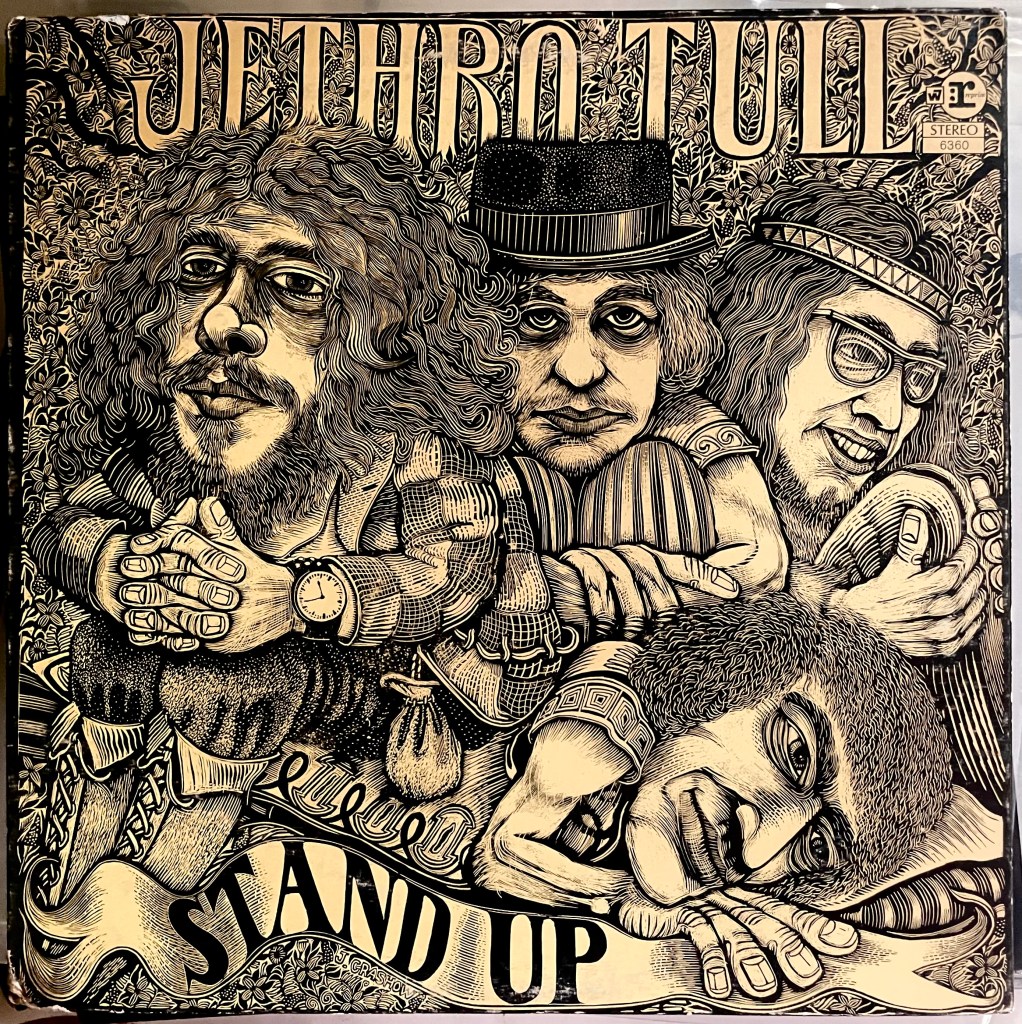
I can’t know this for sure, but I suspect that Mick Abrahams left Jethro Tull under a cloud. In the context of the band, he needed to be saged out of the space. Not to keep anyone in suspense or anything, but they 100% accomplished their goal. MA is pretty much a footnote in the Tull story, an early fork in the road. They become Tull as we know them on Stand Up.
In fact, by the third song on side one, the Brubeck-inspired “Bouree,” we’re already so far beyond the blues rock of what’s-‘is-name that the clock can never be turned back, and it becomes completely unfair of me to link everything that happens here to that guy.
But even though a listener who only had This Was as a reference point would feel his absence throughout, one would also hear the future. A great future. This album led to Benefit, and Benefit led to Aqualung, and everything that followed.
And Mick Abrahams could never have been the guitarist for Stand Up or any record that was made by Jethro Tull afterward. Martin Barre blows him out of the water, all while acknowledging that Ian Anderson is the boss. Where Abrahams wrote about half of the previous record, all of the songs here are Anderson’s, and collectively an upgrade from what had come before.
That’s Martin Barre in the middle, making eye contact with you. Hi, Martin! Photo of my copy of Stand Up by me.
While the Ghost of Mick hangs over this record, by the end of it, the listener is only looking forward, not backward. The band virtually never went back to the blues rock well from which This Was sprang.
And that’s what I like most about that time in rock music, bands grew and developed. Each new album was a chapter in the larger story arc. Taking a big chance such as completely redefining a band’s approach could be either a horrible disappointment or a thrilling expansion of what a band could be. It may be true that in most cases it would be the former, but in this case, it’s absolutely the latter.
So many bands went through these changes around that time. Yes booted Peter Banks in favor of Steve Howe. Genesis lost Anthony Phillips but added Steve Hackett and got Phil Collins in the bargain. In the larger context, the music was changing, but this round of changes seems to have codified things in such a way that they began to become stagnant. Less than a decade later, all of these revisions up in quality became an unassailable status quo which necessitated a revolution.
From this decades-later standpoint, one can see that things were both gained and lost amidst all the changes… as they always are.
Here’s to change. We all need it, from time to time.
Please consider liking and commenting on this post. Subscribe if you can – it costs you nothing and helps this site thrive!Also, do be a dear and share this post with those you know who might appreciate it!
Side 2 is three cover versions from the same bunch of shows as Side 1, plus a studio recording of a final song. This would be the final time that The Nice would go into the studio before Emerson left the band. The first track was composed by Sibelius and the second is by Tchaikovsky. The third is a medley, the first half by Dylan and the second half by Bach.
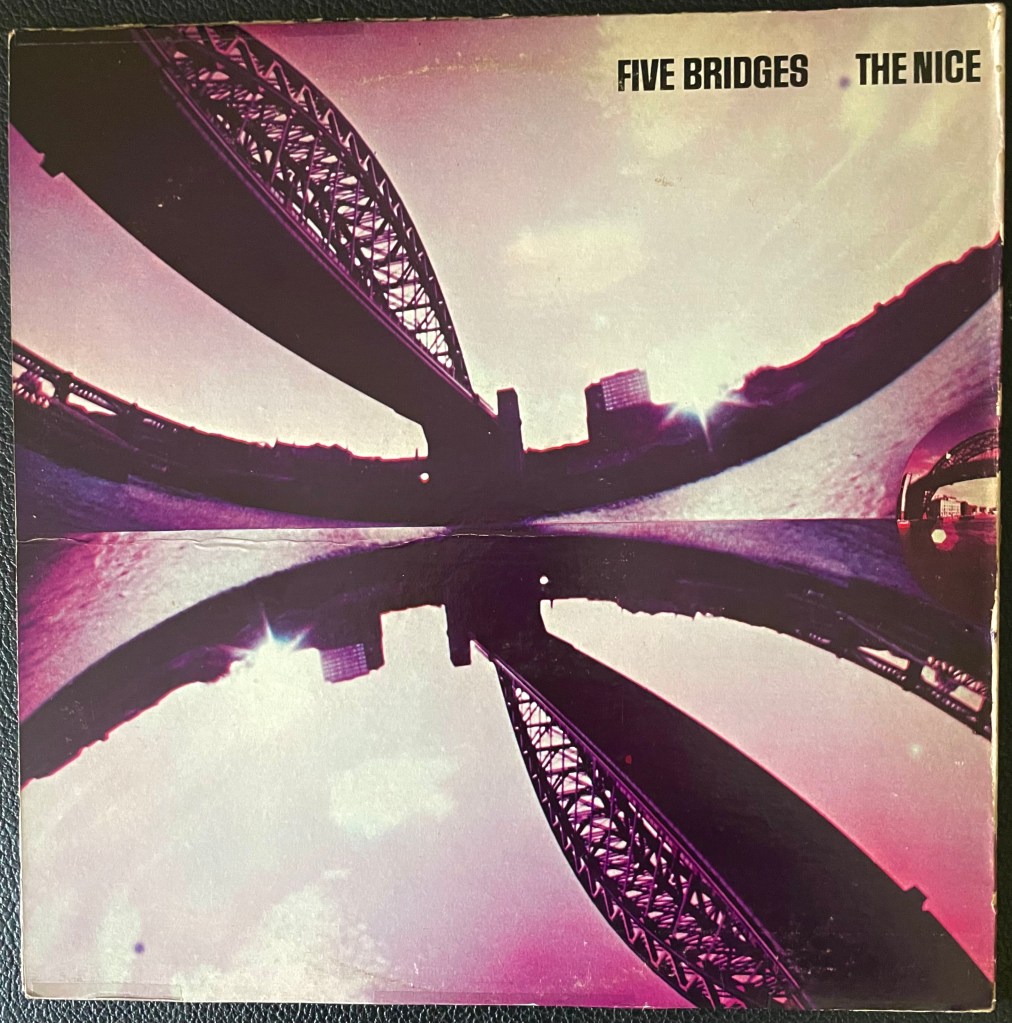
This is the back cover, which is much better on many levels than the front cover, even though it’s the same image.
They were really leaning in to the whole classical/rock fusion thingie, since many of us had music teachers who would proclaim that rock music would never be as great as the classics and wanted to know music that proved those supercilous teachers wrong.
Keith Emerson really was a hero to that kid, the one with the snooty music teacher. Emerson obviously knew that was a big part of his appeal. It was the point of prog in those days. PRO(ve you wron)G. I was that kid, but I never really “got” Keith Emerson.
But lately, I’ve been trying to figure it out – what the attraction is, can I manage to at least understand the mindset.
I found I had a similar problem with Genesis, which I addressed by repeatedly listening to some of their early records. I love Genesis now, up to about their 10th album. Still not a Phil Collins fan, and they were definitely better as a 5-piece, but I do like everything up to Duke.
So where’s that gonna land me with ELP? Especially if I treat them as a continuation of The Nice, which… to be honest, I think they are.
In the end, I have to say that I think Greg Lake does a better job doing the same things Lee Jackson did, and for me, the jury is still out on Brian Davison v. Carl Palmer. In general, I think The Nice had better pocket than ELP, and I guess I’ll lay that at Palmer’s feet. He may be more technically profidient than Davison (though that’s at least somewhat debatable) but that guy never met a groove he couldn’t push.
My sense is that Emerson was already deeply dissatisfied with The Nice by the time of this record, but that the band was still a very good representation of what I think of as the central idea — a keyboard-led power trio with a high rate of musical proficiency and a real penchant for mixing classical music with rock.
I’ll tackle Elegy next…
Please consider liking and commenting on this post. Subscribe if you can – it costs you nothing and helps this site thrive – and share this post with those you know who might appreciate it.
This is a perblog, obvs., so it follows that my approach to music reviews would be quirky. I don’t pretend to encyclopedic knowledge I don’t have, but where I do have knowledge or lore to share, I’ll probably include it.
That said, I make a distinction between the object in my hand and the band it represents. I don’t know these bands, most of them I haven’t and never will see live, so my relationship is with the chunk of vinyl, the CD or the streaming digital file. That’s what I review.
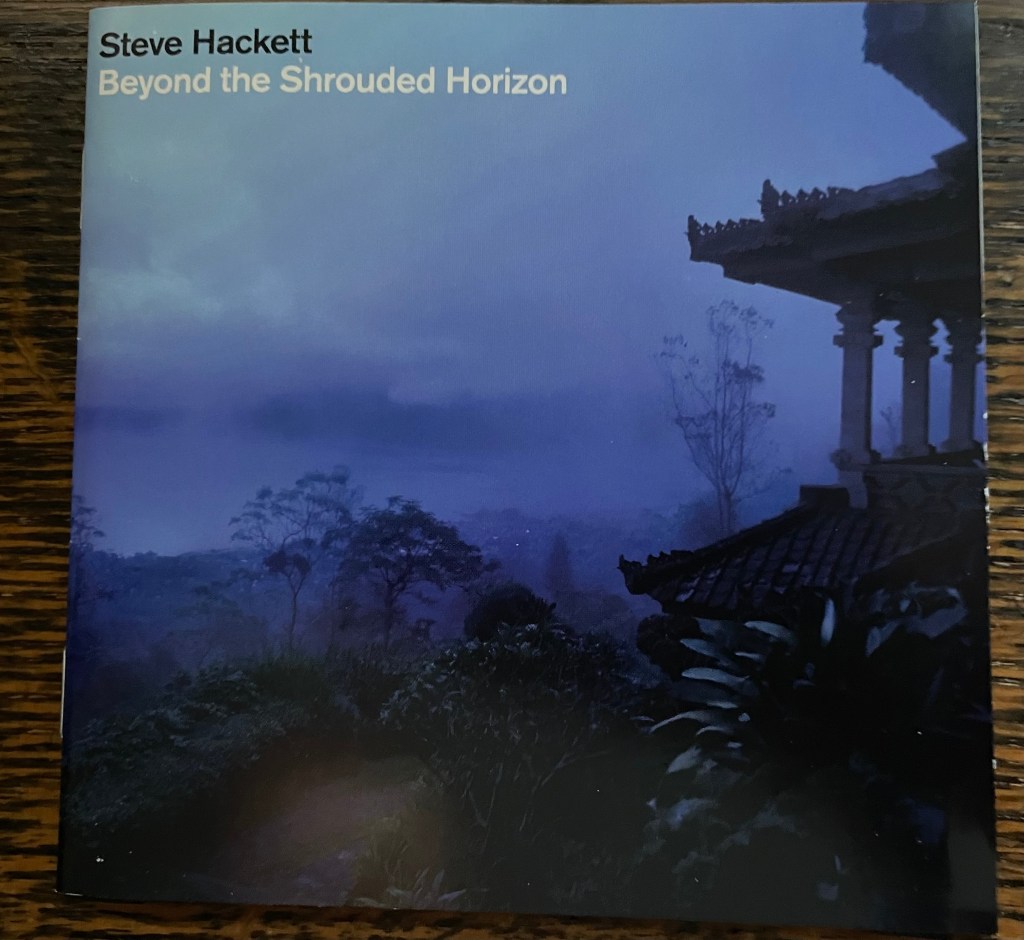
Beyond the Shrouded Horizon was released in 2011 on Inside Out music. It’s Steve Hackett’s twenty-first album.
I love all of the ways this record is its own thing, and yet harkens back to Hackett’s history. It’s very “boomer,” sometimes astoundingly old-fashioned but somehow beautiful even in its most cornball moments.
“Waking to Life” has a harmonic minor motif that’s very nice. I love that he has Eastern European connections in this music.
There are other essays into varied musical styles – The bluesy rock of Prairie Angel and Catwalk, the dense harmonies of Looking for Fantasy – but the central feeling here is mystical, in the same way that blue-hour motif reflected in both the title and the cover photo is.
insert from my copy
One reason this CD appeals is that Karen, my wife, also likes it. She asks me what I’m playing when I put it on, which she doesn’t do for a lot of the music I’m listening to these days. I think she would like Renaissance, which I’m about to start a deep dive into, although she’s aware of Annie Haslam. I think Annie is folk-adjacent enough to appear on her radar.
I love folk too, but I have really felt pulled towards prog and high-energy rock music for the last little while. I think that may have to do with the state of the world. I think i’m hungry for warrior energy, and metal and prog seem to have that energy more than most music.
I do understand “warrrior” energy as “boy music” which I resist on a personal level. I wrestle with that idea a bit, since I prefer to signify on the female side generally, but I feel like this is a time when fighting is the most necessary thing for a world citizen to be ready for.
But a warrior has to be fighting for something, and beauty seems like one of the best things one can fight for. Beyond the shrouded horizon, there may be more beauty to come. I hope there is. But we have to get there.
In the meantime, find beauty where you can.
Please consider liking and commenting on this post. Subscribe if you can – it costs you nothing and helps this site thrive – and share this post with those you know who might appreciate it.

 Broadcast From the Brain Radio