Dear Editors: I Am Not My Transition!

I’ve heard back from more than one editor, and a couple of agents as well, that a story about my childhood that I’ve been sending around is “just a chapter” because it includes a scene of me directly trying to deal with my gender issues: they all seem to want to make the whole 6,000 word story I’ve submitted about that one page-long scene. I don’t have the opportunity to explain that the story I’ve sent them doesn’t really have anything to do with “transition” per sé, because cover letters need to be brief and professional. If I did take the space to try to explain this, it would feel like I’m apologizing for my work if I were to drill down into aspects of my story in a preface that only the editor will ever see. A story needs to stand on its own.

So I’m writing this post.

I’ve been told to just leave that part of the story out, but that seems just as unreasonable. Physically, it would be possible to do that, and while that would certainly bypass the issue of my “problematic” identity, to leave that important part of myself out of my story would feel like I’m retreating into the closet that I’ve fought so hard not to be trapped in. From my point of view, the choice I’m being presented with is either to leave out this important aspect of who I am or focus my story on the expected trope of transition.

Imagine requiring a story about a black kid to include some kind of resolution to the “problem” of their blackness, or else leave that out of the story entirely. Such an expectation from an editor would immediately brand them as racist. And yet, any time I have heard an actual critique of the piece I’m discussing, this is what I hear back.

I’m trans every day. Getting my hormone prescription was only one day, one story. There have been so many stories in my life: I was trans in all of them. My being trans is just a trait, not my whole identity. I am not my transition. That’s not the only story I have to tell. Surprisingly, the vast majority of what’s happened in the time I’ve been walking the Earth has nothing to do with a particular course of medical treatment.

I refuse to accept that any memoir I write needs to either deny who I am or be about the gatekeepers who OK’ed my medical transition. I am grateful to them, but at least one of these people has had me sign an NDA. They don’t want the publicity, and I’m OK with that.

This particular memoir piece is a story about a kid who is being bullied. The fact that the main character is trans is important, but not central, and the resolution to the story is not going to come from waiting the thirty seven years it took me to get my medical transition started: the situation is much more immediate than that, so the resolution must be, too. That resolution must be about being bullied and how the central character, who happens to be trans, deals with it.

By the logic of these literary gatekeepers, no story can be self-contained, because there is always some central issue in a person’s life that won’t resolve into a nice little package with a ribbon and a bow on it. Requiring a self-contained solution to such a global problem as gender incongruence is unreasonable. Conversely, you can live with such an unresolved issue for a very long time, while many other things happen. I can tell you that this is so from personal experience.

Unfortunately, it’s been a major obstacle to getting my work published. It’s quite frustrating.
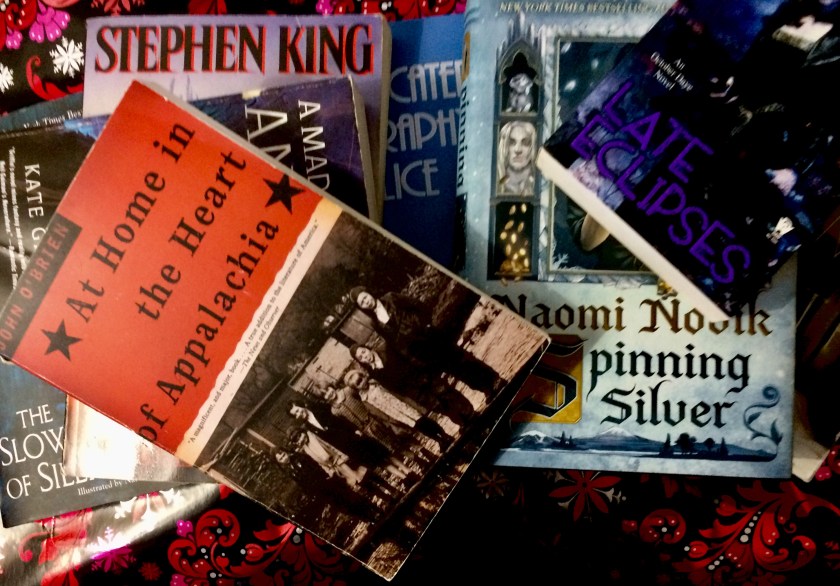
Books I Like Meta

IMG-1596

I’m doing a series of Facebook posts that include exclusive content here as an experiment. I’m also trying to use more pictures, going for shorter posts, and seeing how long I can maintain posting every day.

This is one of those challenge meme thingies. I was asked to do this by Valerie Nelson.

Thus we begin Season 3: The Groma Era.

Season Two: Byzantion

Welcome to Season Two! I hope you like the updated look of the blog.

As I said in Tuesday’s post, I am narrowing the focus of this blog for this season. Over the last couple of months, I have become fascinated by the Byzantine Empire, and as a result I have decided to blog about my research into that period of history.

I will blog about other things, but as often as I can, I’ll discuss what I’m learning about the Byzantines: the eastern Roman Empire, which stood for 1,123 years from the time that the Emperor Constantine move the capitol of the Roman Empire there in 330 AD until the city of Constantinople fell to the Ottoman Turks on June 4th, 14531.

I offer this disclaimer: I’m new to the field of historical research. I’ll try to be as disciplined as I can, but I will likely make some rookie mistakes. If you, dear reader, are a historian yourself, I’ll appreciate any feedback you can offer on my efforts.

My intention is to both maintain a conversational tone (it’s a blog, after all) and subject any historical writing I do to the best level of academic rigor I can manage within this context. I don’t see much evidence that citing in blogs is done to this standard, but The Chicago Manual seems to me to offer the best solution to these two seemingly conflicting ambitions. I’ll start by using a summary of the 15th ed., as that is what I currently have access to, but will move to the 17th ed. as soon as I can acquire a copy.

Also under the heading of disclaimers, I do realize that there are many people who’ve devoted a lifetime to delving into the incredibly rich history of the Empire. I may or may not have much of interest to show someone like that, especially at first. My enthusiasm comes from the several fascinating things about the period that I’ve learned, beginning with the fact that no one from that period of history thought of themselves as a “Byzantine2“, and my hope to make the case that those eleven hundred years are much more important to the shape of the world as it is today than most people realize.

I’m also nerdy enough to believe that some people think it’s fun to learn new stuff. If you’re willing to follow along, I will try to share my journey to Byzantium in as entertaining a way as I can. My hope is that you’ll find the place as fascinating as I do.

Still, this blog will not be solely focused on doings a thousand years and more ago: I have other interests, and I will write about them here. Think of these posts as letters from your geeky friend Diane. To wit: Your geeky friend Diane has stumbled, via one of her random-ish fits of curiosity, into a topic that is richer and more crucial than she expected. Now she wants to tell you what she’s learning, because she’s excited about it, but doesn’t want to become a bore with only one topic in her head.

Notes

1. Speros Vryonis, Byzantium and Europe (New York: Harcourt, Brace, & World, 1970), 189-92

2. Anna Komnene, The Alexiad, trans. E. R. A. Sewter, rev. Peter Frankopan (New York: Penguin Classics, 2009), 5

It Actually Is a Hiatus

Hello, beautiful!

I hope you haven’t missed me too much! I’m sorry to have been away for so long. I was enjoying my Summer, and yes, writing.

This past May and June, I had the rare privilege of hearing Jason Reynolds (who’s winning all the things right now) give two graduation addresses, and they were both very profound, in different ways. One was for Lesley University’s graduate commencement, and the other was at graduation for the semester-after-mine’s graduation ceremony at the MFA program I went to.

The gist of his second second speech at the MFA graduation was that as writers, we are not chosen, we choose to write.

I seem to keep firing up Word. I’ve either been actively writing or thinking about what I’ve been writing this whole summer. I feel like I’m doing the thing. I’m not going to analyze that too deeply right now, but… thing.

And I will be starting up my second season of this blog the first week of October.

Keep watching!

About Englyn Cyrch

This week I am writing Welsh quattrains, one a day for the whole week. The particular Welsh quatrain (four-line poem) form I have decided to focus on is called an englyn cyrch. The best sense I can make from what Google Translate tells me the term means is “attack verse,” or maybe “verse attack,” or even possibly “verse raid.” So, maybe they’re little four-line blitzes.

Englyn Cyrch are very math-y. Each line has seven syllables. The first, second, and last lines must rhyme, and the third line must rhyme with the second, third, or fourth syllable in the last line. I appreciate the strict form as well as the brevity. My challenge is to make them seem somehow natural, or at least musical.

The ones I have written so far this week have not been stellar, but I’m enjoying them as little word puzzles, or language exercises, or little sketches. They’re fun to make on that level. As of this writing, I have produced five (the fifth one went live a half an hour before this post did, the third will appear later in the week) and I think that they are trending towards better as the week goes on, though I liked the one I wrote first best so far.

I hope you find them amusing, and I invite you to try making your own. Happy writing!